11 of 11 Items
11 of 11 Items
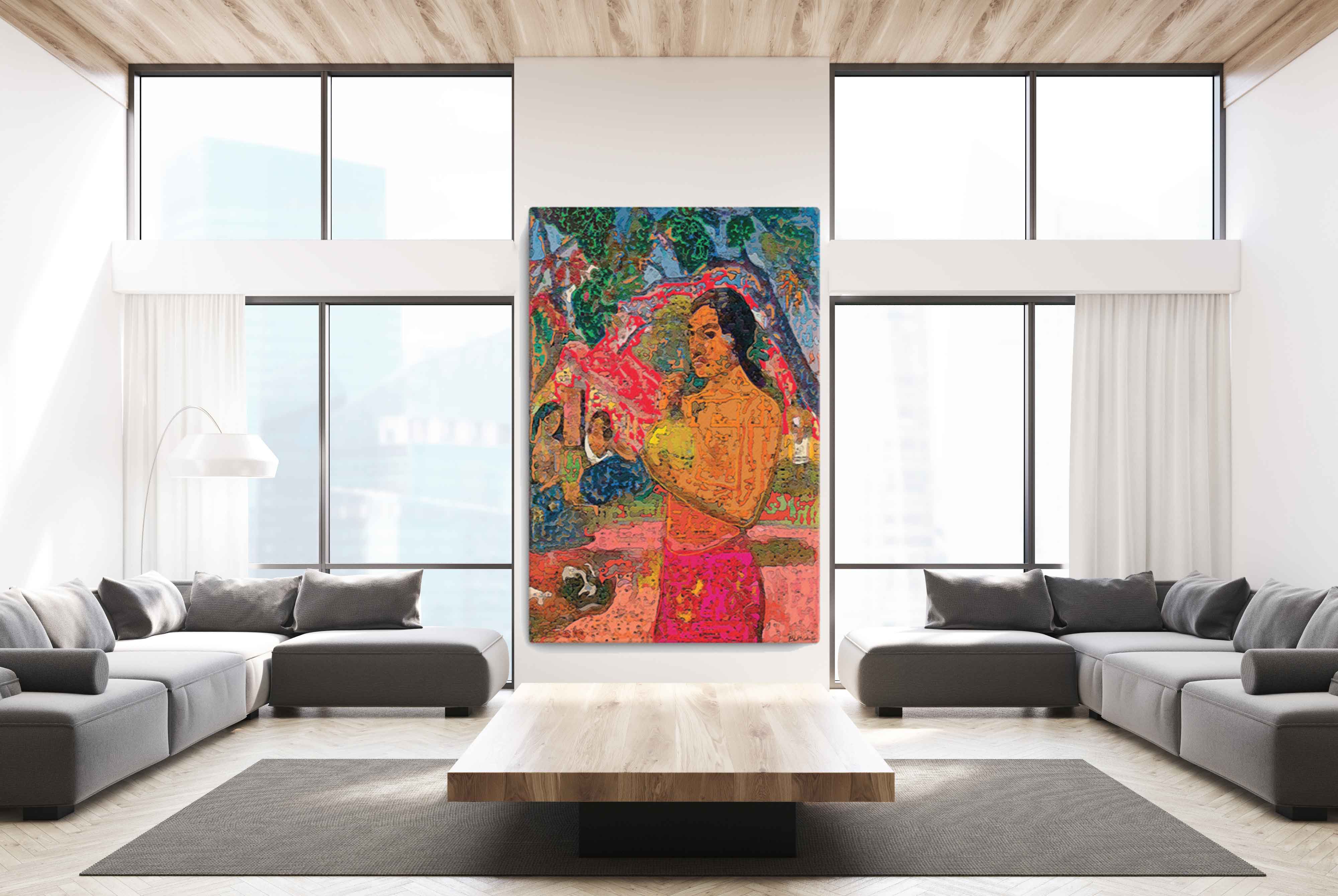



Eugène Henri Paul Gauguin was born in Paris, spent part of his childhood in Peru, and worked as a stockbroker before turning fully to painting. Linked with Pissarro and the Impressionists in the 1880s, he then sought a more synthetic style in Brittany (Pont-Aven), briefly with Van Gogh in Arles, and from 1891 in Tahiti and later the Marquesas. He died at Atuona on Hiva Oa in 1903.
Important works include Vision After the Sermon (1888; Scottish National Gallery, Edinburgh), Where Do We Come From? What Are We? Where Are We Going? (1897–98; Museum of Fine Arts, Boston), When Will You Marry? (1892; private collection), and Spirit of the Dead Watching (1892; Buffalo AKG Art Museum). Breton scenes, still lifes, self-portraits, and Tahitian figure paintings are held in the Musée d’Orsay and many other museums.
Gauguin rejected Impressionist optical flicker for flat colour, strong outline, and symbolic content—Synthetism and Cloisonnism. Pacific subjects, painted and carved, mixed observed life with invented myth. His example shaped Symbolism, the Nabis, and later modernist uses of non-Western form. Collectors and museums continue to treat the Tahitian canvases as central documents of late nineteenth-century painting.