


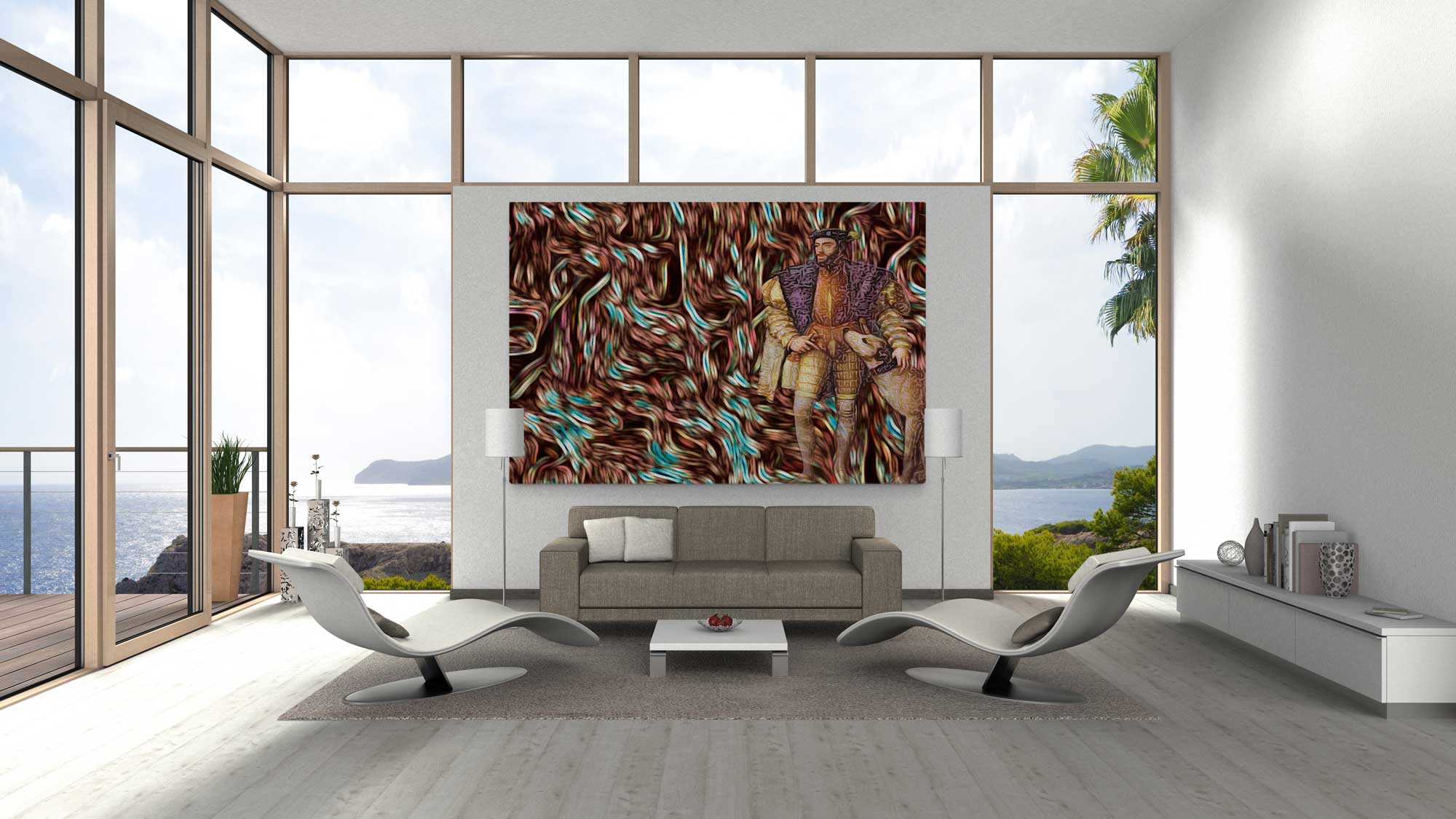




Tiziano Vecellio was born in Pieve di Cadore in the Venetian Alps and trained in Venice under Gentile and Giovanni Bellini, then worked closely with Giorgione. After Giorgione’s death he emerged as Venice’s leading painter, winning state commissions and, later, the patronage of Charles V and Philip II of Spain. Longevity and relentless revision kept his style evolving from crystalline early colour to the broken, late “magic” of free brushwork.
Landmarks include the Assumption of the Virgin (1516–18, Santa Maria Gloriosa dei Frari, Venice), Bacchus and Ariadne (1520–23, National Gallery, London), Venus of Urbino (c. 1534, Uffizi Gallery, Florence), and the mythological poesie painted for Philip II, among them Diana and Actaeon (1556–59, National Galleries of Scotland / National Gallery, London). Portraits such as Charles V at Mühlberg (1548, Prado, Madrid) redefined imperial imagery.
Titian made oil colour the primary structure of painting—warm flesh against cool drapery, glazes built in layers. That Venetian tradition shaped Rubens, Velázquez, and much of later European portrait and mythological painting.