
Elvis Song Lawsuit Puts AI Credit in the Mix
Priya N. Chen on 30th Oct 2026
AI Art
Elvis Song Lawsuit Puts AI Credit in the Mix
I would not price an AI-made song until I knew whose work the model learned to echo. Salon.com reports that the owners of Elvis’s songs are suing over AI use. Its headline also points to Elvis borrowing from Black artists. The available report gives no details about the claims or the remedy sought, so the central question is still open: what use of a song is being challenged, and who gets to control it?
For a music model, the path runs from training audio to generated output. The system learns patterns in the material it is trained on, then uses a prompt to shape a new result. That does not, by itself, tell us whether a particular recording or composition was used, whether the output copies protected material, or who deserves credit. Those answers depend on facts the report does not provide. A model’s resemblance is not a rights ledger.
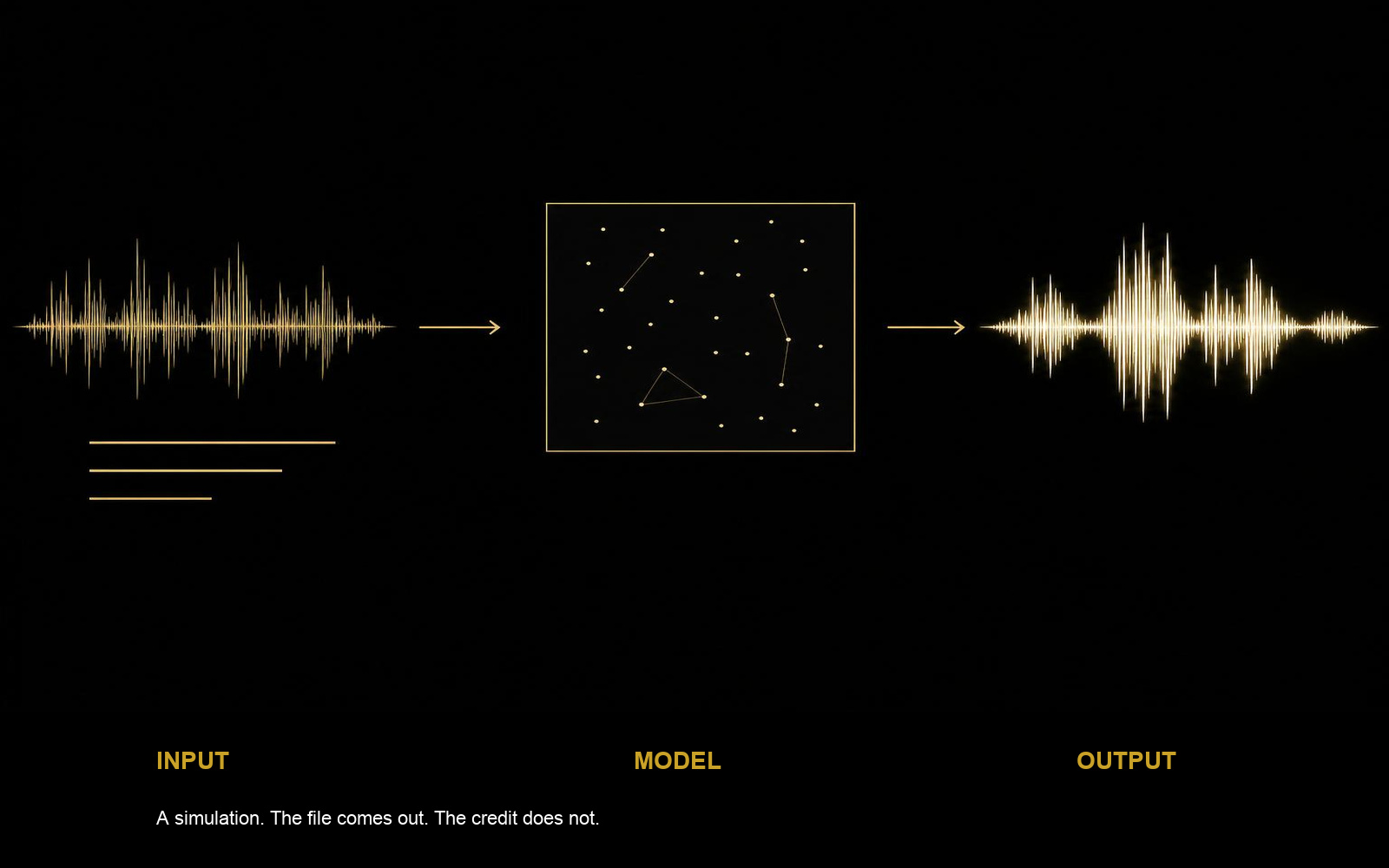
A simulation of the model
This is a simulation of the mechanism. It is not a finding about the lawsuit. The report still does not name the system, the training set, or the claims.
Training. Picture a stack of recordings. The model does not file them as songs a person can open later. It adjusts its numbers so that one slice of sound makes the next slice more likely: a drum hit, a vowel, a chord change. After training, the stack is gone from view. The tendencies remain.
Generation. A prompt arrives: uptempo rock vocal, a dry room, a short chorus. The model proposes the next fraction of a second, then the next, until a new audio file exists. The prompt steered that pass. It does not list the recordings that shaped the tendencies.
The simulation produces a file. It does not produce a credit, a clearance, or a receipt for the material in the stack.
Ten points on the technology
- A music model is trained on audio, sometimes with text labels beside it. It keeps tendencies, not a shelf of songs.
- Training changes the model's numbers so it can guess a likely next slice of sound: pitch, rhythm, timbre, phrasing.
- A prompt is an instruction at generation time. It steers the new file. It is not a list of what was in the training stack.
- Generation builds a new waveform, slice by slice. The file is new. The tendencies that shaped it may still echo the training material.
- A resemblance can be a style, a melodic shape, a voice-like timbre, or a passage that tracks an existing recording. Those are different events.
- The model does not write composer credit, sample clearance, or a royalty split onto the file.
- Hearing a voice that reminds a listener of Elvis is a judgment about the output. It does not identify which recording or composition entered training.
- The sound recording, the composition, a voice or likeness, and the generated file can belong to different people. The technology does not merge those claims.
- A platform can keep the prompt, the model version, and the terms the maker accepted. That is a record of the pass. It is not a ruling.
- A maker who wants an account of the work keeps four things together: the tool, the model version, the prompt, and what the terms say about training and sale.
Artists should watch the chain of permission and payment. What recordings and compositions entered training? Can a rights holder identify a use? Does a platform disclose how it handles claims, credit, or revenue when a generated track draws on existing music? A sale can make the question sharper: the buyer may receive a file, while the artist still cannot explain what the model learned from or whose work shaped the result. Until those terms are clear, “AI-generated” describes a process, not a clean title.
The headline’s reference to Black artists also makes credit more than a technical checkbox. Musical influence can travel through styles and performances that are harder to trace than a sampled recording. That history deserves care, but it cannot substitute for evidence about this lawsuit. For makers, the practical lesson is to keep prompts, tool terms, source records, and sales language together. The sound may be new; the path that produced it still needs an account.
Join Neoclassical Pop Art daily take on the arts, the weekly letter, and first word on product launches, sales, and free gifts.