
Yoshitomo Nara’s Lost Girlhood Is No Cute Little Rebellion
Priya N. Chen on 5th Nov 2026

Yoshitomo Nara’s Lost Girlhood Is No Cute Little Rebellion
I think “freedom in color” is a lovely phrase—and a dangerous one. It can make a difficult life sound like a paint-box cure. The New York Times published “Nara, Dreaming of a Lost Girlhood, Finds New Freedom in Color” on November 5, 2026. The headline offers us a neat transformation: loss goes in, color comes out. Art is rarely so obliging.
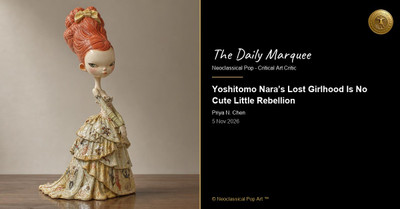
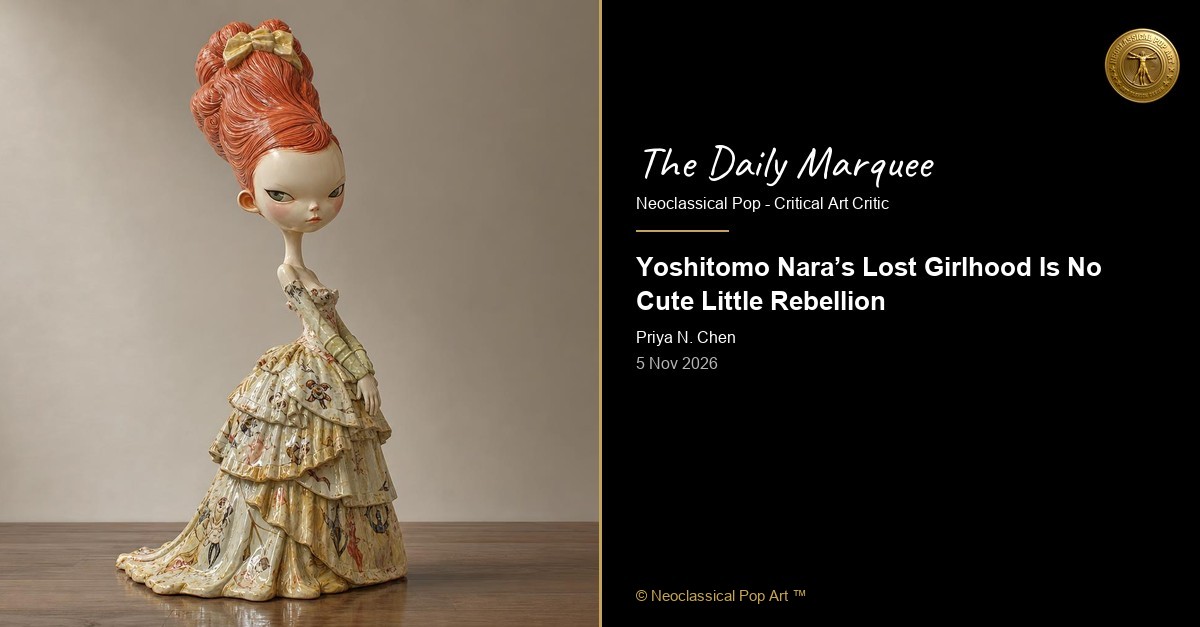
Yoshitomo Nara’s appeal has always depended on a delicious mismatch. His childlike figures look as if they wandered out of a picture book, then noticed the adult world was behaving badly. Their big heads and small bodies invite tenderness; their narrowed eyes refuse to be merely sweet. That tension is the work. Call it girlhood, and the image opens onto a familiar pop-cultural trap: girls are allowed to be cute, provided they stay easy to look at. Nara’s little rebels make cuteness look less like innocence than a disguise with a sharp edge.
Color can loosen that disguise. It can turn a face into a mood before we have time to pin it down, and make a painted figure feel less like a character in a story than a person keeping her own counsel. But color is not automatically freedom. Advertising has spent a century using bright hues to sell us happiness in convenient sizes. Pop culture still packages girlhood as a palette: pink for sweetness, black for rebellion, a new shade for every new self. The interesting question is not whether color liberates, but whether the image gets to remain strange after we have decided what it means.
That question reaches back to art history, too. The child in a painting has often been made to stand for something adults want: innocence, promise, danger, a lost past. Nara’s figures are compelling because they resist being tidy symbols. They can be funny, sulky, lonely, and faintly alarming all at once. The headline’s “lost girlhood” risks turning that unruly presence into a sentimental souvenir. I’d rather see the loss as a pressure the art keeps alive—not a wound color politely closes.
Today’s news gives us one New York Times story, not a chorus of outlets, and that small fact suits the subject. Nara’s work does not need a grand announcement to make its point. Its little faces already know how attention works: first we smile, then we notice they are looking back. That is the real freedom here—not escape into a prettier world, but the right to be vivid without becoming agreeable.
Your Daily Marquee arrives with the morning coffee: one remarkable event in the art world, and a critic witty enough to zip the coffee with it.
Join Neoclassical Pop Art daily take on the arts, the weekly letter, and first word on product launches, sales, and free gifts.