
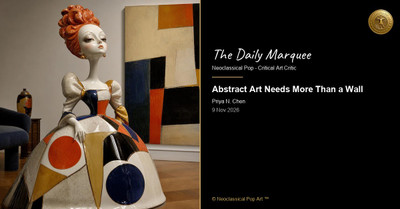
Abstract Art Needs More Than a Wall
Priya N. Chen on 9th Nov 2026
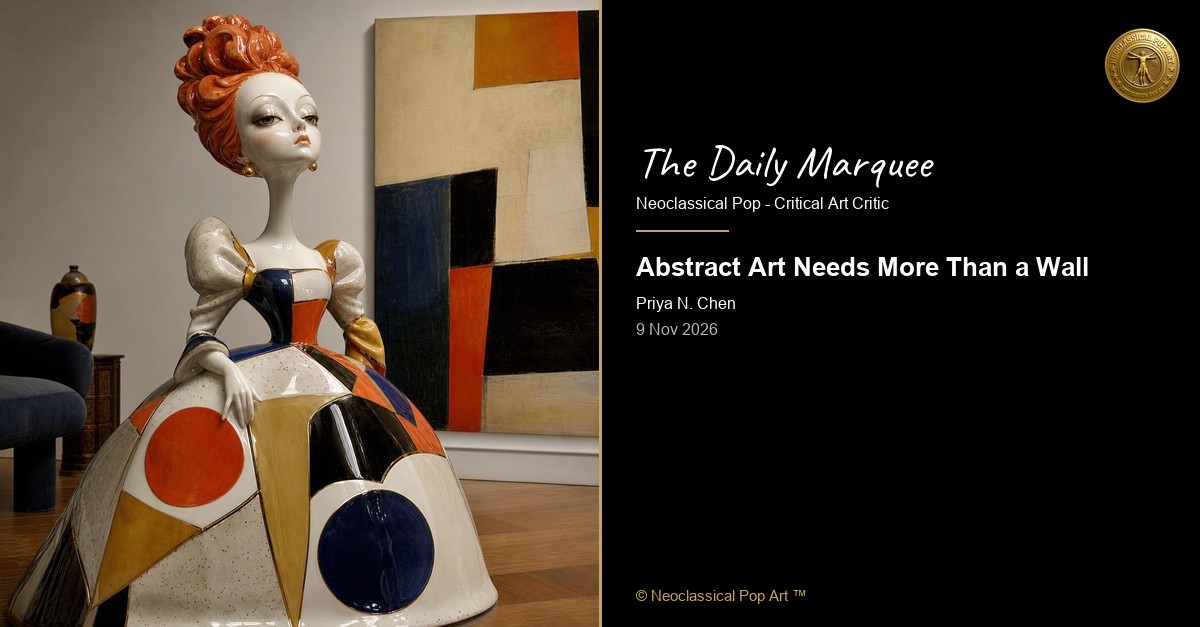

Abstract Art Needs More Than a Wall
I like abstract painting best when it refuses to behave like a polite guest. It should unsettle the room a little. The Fitchburg Art Museum is highlighting abstract paintings in an exhibition, according to the Sentinel and Enterprise on November 9, 2026. That is a promising invitation, but “abstract” is a large door with no sign telling us what waits behind it. The report gives no artists or works. So the real question is not whether abstraction deserves a show. It is whether the show lets us see what abstraction can do.
A painting without a recognizable subject is not a painting without a subject. A stripe can feel like a command; a blur can hold the suspense of a face just out of focus. The eye starts making its own weather. That is abstraction’s old trick, and its lasting pleasure: it turns looking into an event. But the word can also become a velvet rope. Put “abstract” on a wall label and some visitors hear permission to enjoy color; others hear a warning that they might not understand. A good exhibition should make both groups feel welcome, then give them something to argue about on the way out.
The history is full of artists who made that argument with paint. Modern abstraction broke the old bargain that a picture must imitate the visible world. Later, pop culture borrowed its bold shapes and bright surfaces for album covers, fashion, logos, and screens. Now we swipe past fields of color every day, polished to catch the eye and gone in a second. A museum can slow that glance down. It can show how a painted surface is not just decoration, but a record of decisions: where a hand pressed, where a color fought another color, where the artist stopped. That is a richer kind of attention than simply asking whether a canvas matches the sofa.
I want the Fitchburg show to make abstraction feel less like a category and more like a lively encounter. The museum’s name is in the news; the paintings themselves remain undescribed. That gap is a useful reminder: exhibitions are not made vivid by their labels alone. They need works that hold the eye, and rooms that let people meet those works without a password. My column’s verdict is simple: abstract art is not difficult because it has no subject. It is difficult because it asks us to become one.
Your Daily Marquee arrives with the morning coffee: one remarkable event in the art world, and a critic witty enough to zip the coffee with it.
Join Neoclassical Pop Art daily take on the arts, the weekly letter, and first word on product launches, sales, and free gifts.