
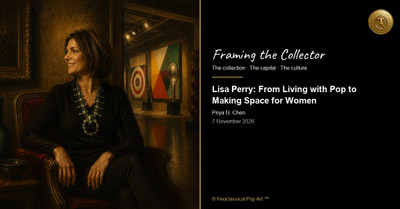
Lisa Perry: A Room for Looking, a House for Making
Sri PriYa N. Chen on 7th Nov 2026
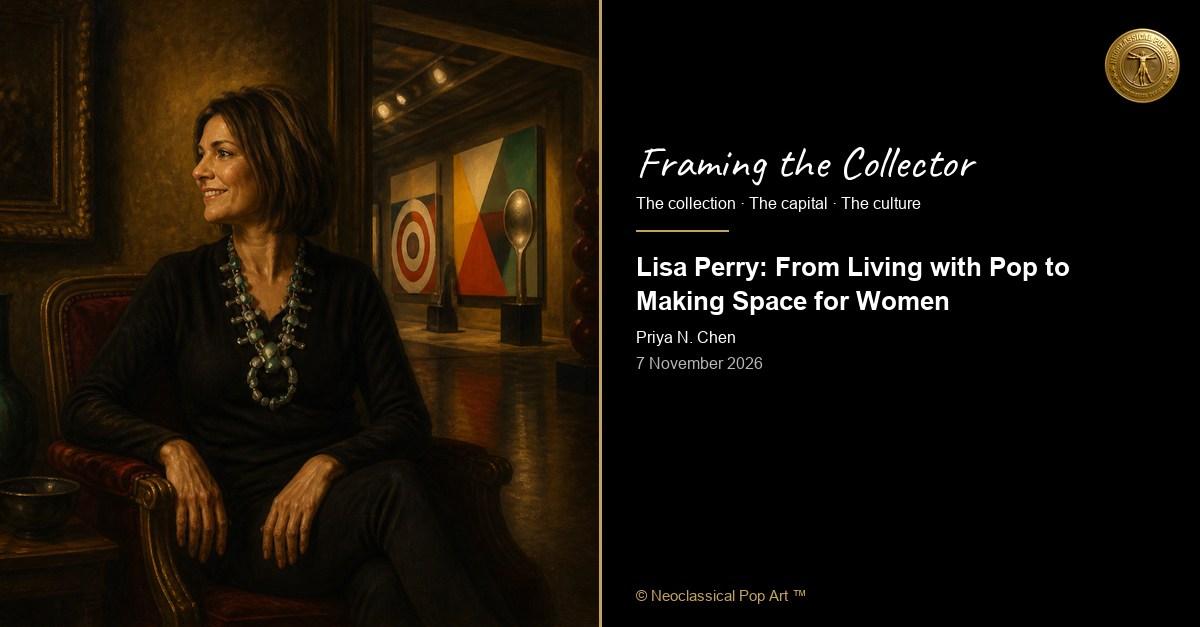

Lisa Perry: A Room for Looking, a House for Making
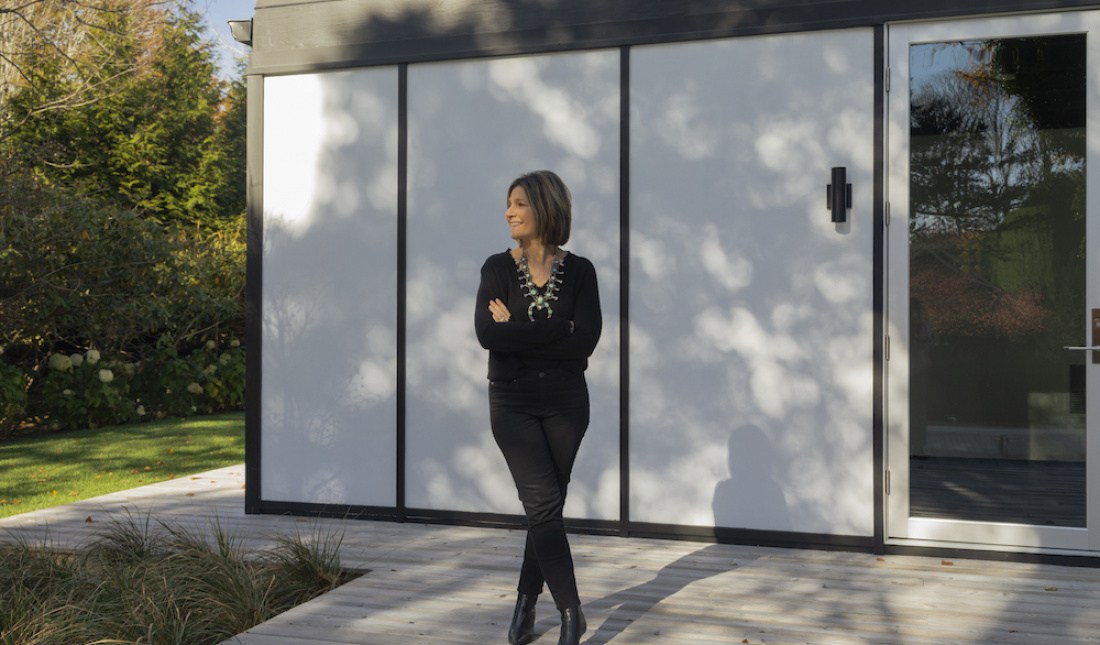
In one room of the Perry home, a room is painted twice. Roy Lichtenstein’s Interior with Built-In Bar (1991) is a large painted interior of strong outlines, dot patterns and a checkered floor, and it hangs behind the real sitting area, so that the pictured room and the lived-in room face each other. Lisa Perry and her husband, Richard, found works through Pop Art books, and they set their sights on the 1960s and early 1970s. Then they did what people who live with art do. They moved works around, and they judged each one by the pleasure of looking at it.
The eye began with cloth. Her family was in the fabric business, and textiles remain a soft spot. She studied fashion and textiles, and she became a collector of vintage couture from the late 1960s. She grew up in a house in the suburbs of Chicago, and years later a 1960s house in East Hampton reminded her of it, and she fell in love. The Chicago house has since been demolished.
In 2007, friends kept admiring what she wore, so she made samples from her favorite vintage 1960s looks. Her background was in textiles. She found a fabric she loved and a person to sew, and she had a collection. It was meant for friends and family. When stores took an interest, she says, she could officially call herself a designer, and she calls the whole turn “a fluke.”
The label spoke in the language of 1960s fashion and Pop art, and it grew into lifestyle objects. Over the years she collaborated with artists or their estates, among them Jeff Koons, Robert Indiana, Andy Warhol, Roy Lichtenstein and Donald Robertson. She counts her first window displays at Barneys New York, Bloomingdale’s and Bergdorf Goodman among the favorite moments of the first decade, and Barneys became an exclusive partner. She dressed her friend Hillary Clinton, who stood on stage in one of her designs during the 2017 election, and she opened stores of her own.
All the while the walls kept filling. For decades she and Richard have been amassing important Pop and Minimalist art of the 1960s. The collection documented in ArtReview holds Andy Warhol’s Self-Portrait (1966), Lichtenstein’s Girl with a Dish Rag (1962) and Elizabeth Peyton’s Prince William and Prince Harry (2000), and beside the Pop it holds Op, with Bridget Riley’s Intake (1964) and works by Victor Vasarely. The homes in New York, North Haven and Palm Beach carry Chuck Close and Damien Hirst, and a closet of vintage couture by Paco Rabanne, André Courrèges, Rudi Gernreich and Pucci. In 2007 a crane lifted a green Jeff Koons Diamond, five feet of stainless steel, onto the Manhattan terrace.
Then came the pandemic, and with it a search for what she called a creative outlet. She found a house. Paul Lester Wiener had designed it in the early 1960s for the collectors Robert and Ethel Scull, and it was threatened with demolition. Perry bought it and restored it, joining architecture, art, design and support for women in a single project. She described it as herself starting from scratch, a new beginning after decades of collecting with Richard. Asked in 2023 what she treasures most, she named this house, and said she treasures that she was able to save it.
It is called Onna House, and Onna means “woman” in Japanese, a nod to the modernist Japanese aesthetic of the building. In 2022 the first exhibitions showed the work of Mitsuko Asakura and Ligia Dias, and Perry acquired Dias’s paper dress collection. Her eye was changing. Where she once needed an intense attachment to a work before she would live with it, she became more open and less predictable. The house’s mission treats textiles, ceramics, paper, wood, needlework and found objects as equal to painting, and it puts the work of women artists and designers first.
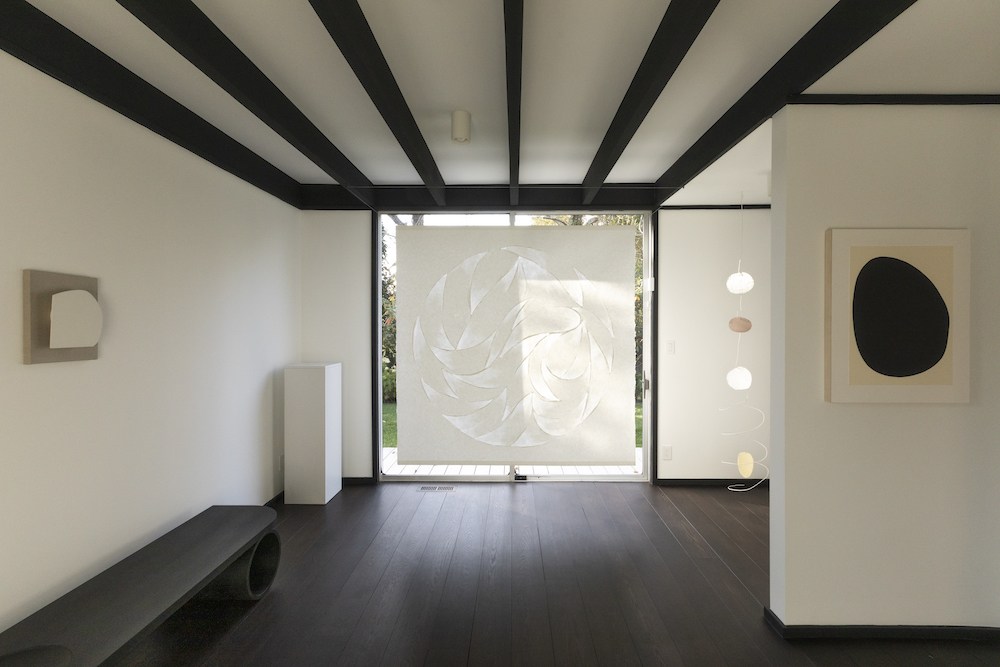
She set one rule. She would show only women’s work: “I will not deviate,” she told CULTURED, so that others might follow. In 2023 the exhibition Pearls, Pills, and Protests brought together Jerelyn Hanrahan, Kelly Tapìa-Chuning, Lulu Varona and Michele Pred, and for it Perry acquired Hanrahan’s outdoor sculpture of a strand of pearls, fifty feet long. By May of that year she could say that she had collected and shown work by nearly fifty women artists.
She built the house to work for artists and for buyers alike. She wanted collectors at every stage to find something they could buy, and she wanted women to sell work and develop their practices. She discovered local women artists and offered them space to meet and collaborate. Behind it stood decades of support for women’s organizations, and, in her own field, the book Lisa Perry Homes, published by Assouline. Asked about value in 2023, she called the Pop collection she shares with Richard her best investment, and she spoke of the time, energy and passion that making art takes.
The next room is planned. Onna House announced a Soho gallery with communal space and a tea room, and it names Jessie Mordine Young, Kaori Tatebayashi and Katie Grove among its artists. From a childhood house in Illinois to a checkered floor and a restored modernist home, Lisa Perry has kept building rooms: one to look in, one to live in, and one in which women artists are the point.
Collection economics
In her May 2023 Artnet interview, Perry called the Pop collection shared with Richard her best investment. This was her personal assessment.
Onna House also operates as a gallery connecting artists with buyers. Its exhibition programme and private collecting are distinct activities.
The editorial lesson: keep the purchase decision, the cost of living with a work and any future resale expectation separate. When a collector also runs a gallery, distinguish work acquired for a collection from work offered for sale.
Lisa’s 10 collecting tips:
Adapted from public interviews
Live with Pop; keep discovering
Join Neoclassical Pop Art daily take on the arts, the weekly letter, and first word on product launches, sales, and free gifts.