
Patrizia Sandretto Re Rebaudengo: A Notebook of Pillboxes, a Foundation
Sri PriYa N. Chen on 7th Nov 2026

Patrizia Sandretto Re Rebaudengo: A Notebook of Pillboxes, a Foundation
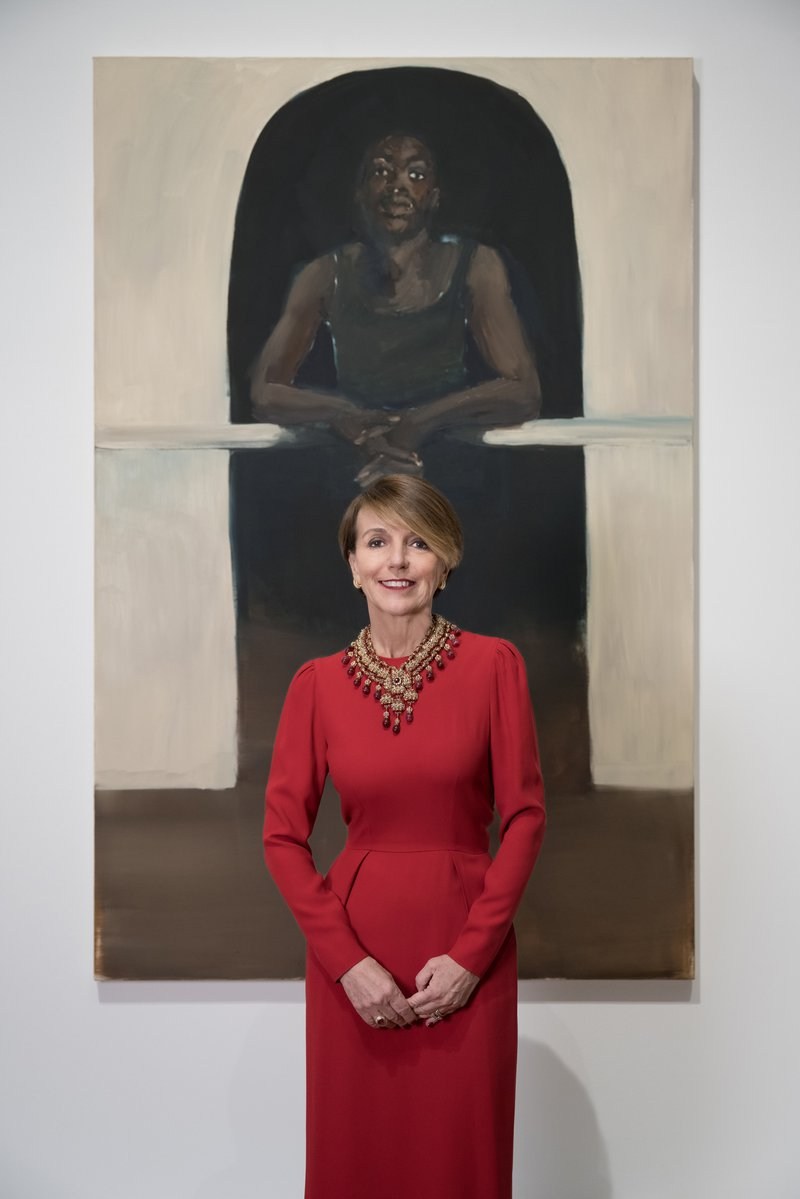
Patrizia Sandretto Re Rebaudengo says collecting is part of her DNA. She grew up around paintings and old art objects. Her mother collected Sèvres and Meissen porcelain, and as a child Patrizia collected small pillboxes, all catalogued and numbered in a little notebook.
She has a background in economics. In 1992, on a journey to London, she discovered contemporary art. She visited many museums and galleries, and above all she began to know artists and to visit their studios. It was the season of the Young British Artists, and she met Anish Kapoor, Rachel Whiteread and Julian Opie in their studios.
She decided to collect works by living artists, made at about the time she bought them. At first the collection was generational, growing out of friendships with artists of about her age, and through them she learned to look ahead to the youngest generations. It began with five themes covering art from the 1980s on: British art, artists working in Los Angeles, Italian art, female artists and photography. Since globalization she says she can no longer categorize it by nationality, genre or medium. It has become an evolving global map of art production.
Travelling, she noticed the lack of institutions in Italy. She wanted to support artists, to share her collection with the public and to fill that gap, so she set up the Fondazione Sandretto Re Rebaudengo. She launched it in Turin in 1995, one of the first art foundations to open in Italy. It is a non-profit institution, and she chose to model a private foundation on a public museum, a museum-laboratory. Its ethos, UBS reports, centers on participation.
In 1997 the foundation opened Palazzo Re Rebaudengo, an 18th-century mansion in Guarene. In September 2002 it opened its Turin headquarters, a 4,000 square metre centre designed by Claudio Silvestrin in a former factory for car rims, with a cafeteria designed by Rudolf Stingel. In 2019 it created the Art Park on the San Licerio hill in Guarene, among Nebbiolo vines, with free entry.
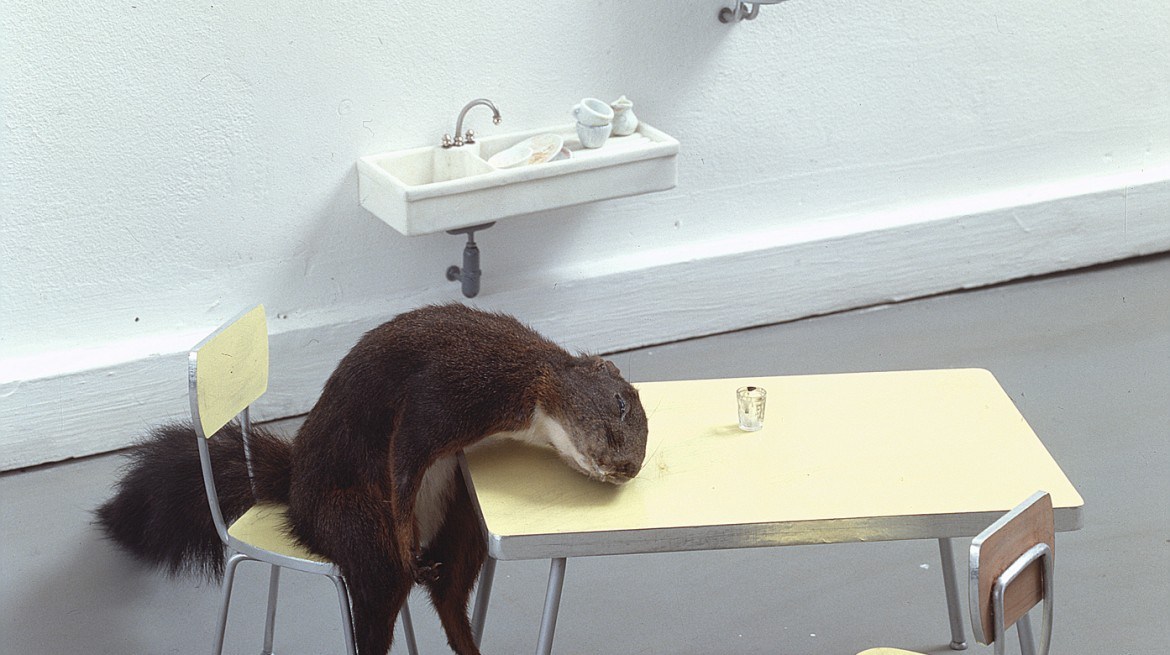
From 25 September to 2 December 2012 the Whitechapel Gallery in London gave a solo display to Maurizio Cattelan from her collection, the first display of the collection in its programme of rarely seen public and private collections. It showed Bidibidobidiboo (1996), a taxidermised squirrel in a miniature version of the kitchen in which Cattelan grew up. It showed Lullaby (1994), a large bag of rubble from Milan’s Contemporary Art Pavilion, damaged in a Mafia-related bomb attack. It showed We are the Revolution (2000), a boy-sized Cattelan in the felt suit of Joseph Beuys. The gallery called the group one of the most substantial holdings of Cattelan in a European collection, shown publicly in the UK for the first time.
The foundation has three aims, in her words: to promote Italian and international artists through exhibitions and by supporting the production of new works, to bring an ever-growing public closer to contemporary art, and to create dialogue and partnerships with art institutions worldwide. It commissions and co-produces ambitious works, including for the Venice Biennale and documenta. From 4 November 2016 to 12 February 2017 it presented Josh Kline: Unemployment, Kline’s first solo exhibition in Italy.
Since 2007 the Young Curators Residency Programme has brought three young international curators a year to Italy for three months. Since 2012 the school Campo has trained ten young Italian curators a year. With the Philadelphia Museum of Art the foundation runs the Future Fields Commission in Time-Based Media, a new work commissioned every two years: Rachel Rose in 2018, Martine Syms in 2021 and Lawrence Abu Hamdan in 2022.
Its education department and its mediation team, free and in the exhibition space since 2002, serve children from age two, families, schools, young people and the vulnerable, with attention to accessibility. Verso, begun in June 2021, is a programme for people aged 15 to 29. A foundation like hers, she told UBS, should look to younger artists and pay particular attention to young people.
In 2017 she established the Fundación Sandretto Re Rebaudengo Madrid, with solo exhibitions that include Ian Cheng (2020), Michael Armitage (2022) and Lucas Arruda (2023). On San Giacomo Island in the Venetian lagoon, restoration has begun on three gunpowder warehouses to become art spaces and artists’ residences. In April 2022 the artist Jota Mombaça gave a first performance there. She and her family hope to make the island a meeting place open to all.
She sits on the International Council of MoMA, the International Council of the Tate Gallery and the Leadership Council of the New Museum, among other boards. The collection has been shown in many institutions, among them the Whitechapel Gallery in London, the Hara Museum in Tokyo and Palazzo Strozzi in Florence. Meeting artists, curators, museum directors and other collectors changed her life, she says, a privilege she felt she had to share. The foundation is her way of returning it.
Her honours include Chevalier de l’ordre des Arts et des Lettres and the LEO Award from the ICI in New York. In 2022 she was named Torinese dell’anno, in the city where she was born, built her professional career and where the foundation has its headquarters. After 30 years she hopes to continue, especially through her children, so that what she has achieved will never end.
Collection economics
She chose to model a private non-profit foundation on a public museum.
The foundation supports production through commissions and co-productions of new works.
The editorial lesson: separate money spent buying works from money supporting production, exhibitions and education.
Patrizia’s 10 collecting tips:
Adapted from public interviews
Collect works, then build relationships
Join Neoclassical Pop Art daily take on the arts, the weekly letter, and first word on product launches, sales, and free gifts.