
Alain Servais: Ideas, Not Objects
Sri PriYa N. Chen on 7th Nov 2026

Alain Servais: Ideas, Not Objects
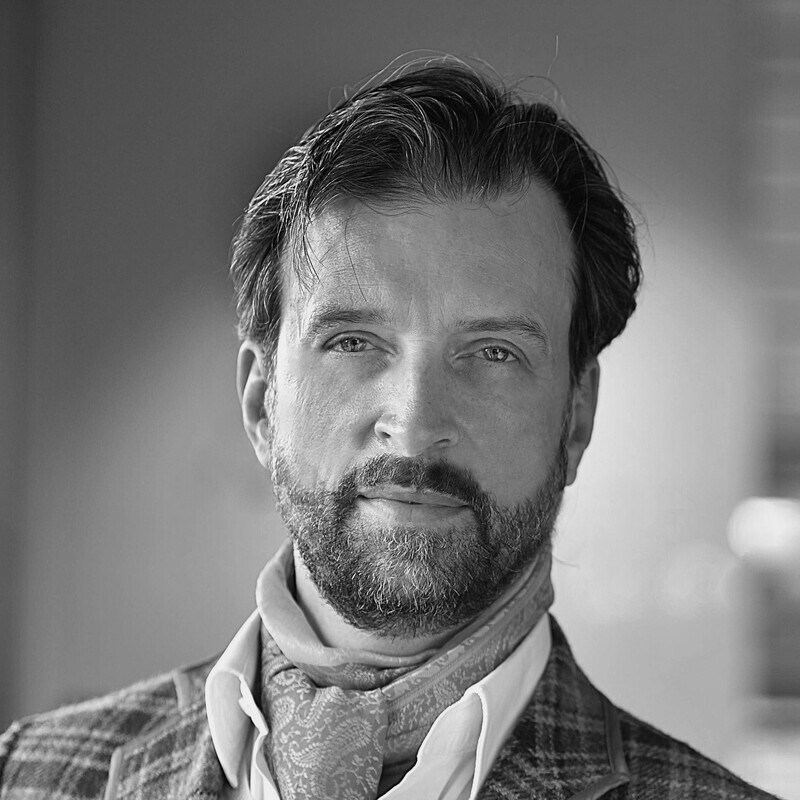
At sixteen, Alain Servais travelled to New York with his father and found himself at the Museum of Modern Art, in front of Picasso’s Les Demoiselles d’Avignon and Van Gogh’s Starry Night. Something, he says, snapped in his brain and his heart. Nothing in his background pointed that way: there was no history of art collecting in his family and no art history in his studies. Many more years, taken up with study and an early career, passed before the moment became a passion.
He studied classics, took an MBA in applied economics and went into investment banking in New York and London. His parents had little interest in culture. In New York he wandered into MoMA and had a reaction he compares to hearing Led Zeppelin or Talking Heads for the first time, and museums gave him a serenity the demands of his work did not. He looked for at least three years before he bought anything.
Chance did the rest, as he tells it. A childhood friend, Christophe Van de Weghe, gave up professional tennis after an injury and took a sales job at Gagosian in New York, which opened Servais to the inner dealings of the art world. The sale of his stake in the investment bank gave him time and money. The first work he counts as part of his collection is a photograph by Nan Goldin, bought after he saw her slideshow at the Whitney Museum. He began collecting in 1997.
He then set the collection a rule that few collectors accept. It would hold any medium except painting and drawing. Artists tend to question the status quo, he reasoned, while buyers and collectors mostly belong to the establishment being questioned, and most of them treat paint on canvas as art and value it far higher. He chose to back the artists who take the less instantly rewarding path. Since before 2000 he has also followed digital art, which he ties to computers and the internet, the great development of his generation.
He says he collects ideas, not objects, and he sees art as a language that opens the heart to the Other. He is drawn to minorities, because in their treatment, he believes, a society’s maturity shows. He names the anthropology of Claude Lévi-Strauss and Edgar Morin’s The Lost Paradigm, which, he says, explains a certain rawness in the collection. He buys underrepresented art that he thinks significant and worthy of preservation, and he sees himself as its custodian rather than its owner. Art, he says, must surprise him, challenge him and disturb him.
The collection holds the proof. Ian Cheng’s Thousand Islands, Thousand Laws (Miami) (2013) belongs to the Servais Family Collection, as do Josh Kline’s Sleep is for the weak (2011), Julian Charrière’s Future Fossil Spaces (2015) and Svay Sareth’s Ruins (2014), which hung at the Loft in 2016. His recent acquisitions include Adrian Melis’s Engagement Rate Formula (2019), which proposes turning social media likes into hundreds of plaster casts as refugee aid, and Broomberg and Chanarin’s The Bureaucracy of Angels (2017), a visual document of a boat graveyard left by migrants arriving from North Africa.
In 2020 he told Ocula about a website by Rafaël Rozendaal that he owns. A signed contract requires him to maintain it at his own cost for ever and to keep it available to the public, so that anyone may show it on a screen at home. He paid US$7,000, he said, for something he will never fully own, because it will never be his alone.
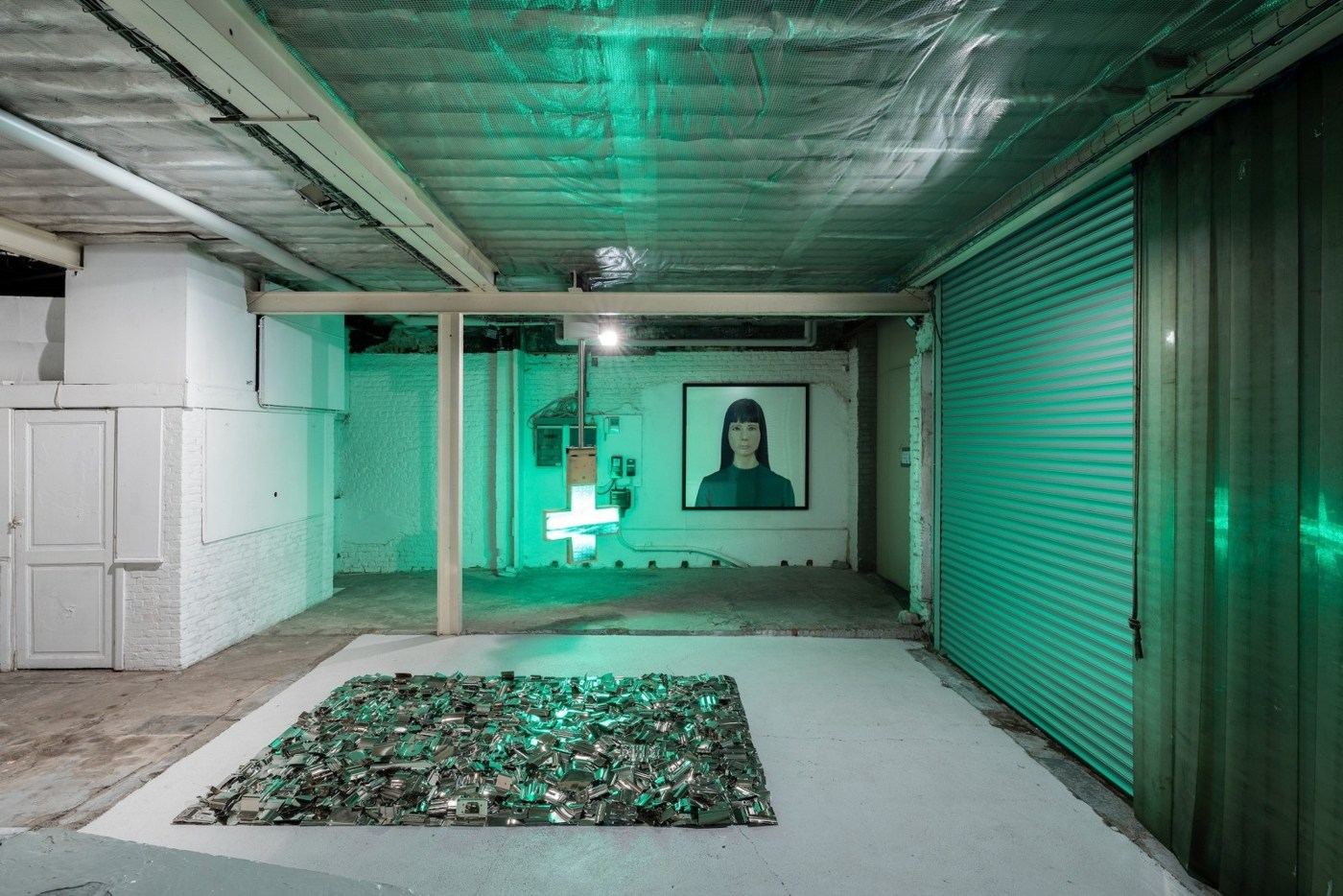
The collection lives at the Loft, a 900-square-metre converted factory in Schaerbeek, in Brussels, that was once his home. From 2000 it has staged an annual curated exhibition from the collection, and since 2010 it has doubled as an artist residency. Curators he invites rearrange the works, and the current exhibition, hear/here, explores silence and includes Lawrence Abu Hamdan, Rada Akbar and Olga de Amaral. Displaying the work, he says, is a priority, because art only lives when on display. He almost always answers yes to a correct loan request, even lending to friends who own no art.
He has no wish to build a private museum, which he calls much too expensive and vain in its durability. He prefers close cooperation with institutions, in the manner of the Sandretto, Broad and Walton collections. By his own count he adds up to 80 works a year, and the collection now numbers around 1,200. Recently he acquired Ella Fleck’s Training Material (2026) at Frieze London and a Babi Badalov at Asia Now Paris. He visits at least one new city every year, among them Taipei, Guangzhou, Mérida, Istanbul and, more recently, Uzbekistan.
“I didn’t start collecting. I started experiencing art,” he says. “Collecting art for me is not accumulating objects at all. It’s living differently.” Asked what a visitor should understand by walking through his collection, he gives one word: complexity.
He sees collecting as a responsibility. Artists need studios, galleries need to pay their rent and ambitious works made for biennials can struggle to find a home, and collectors can sustain that network by supporting galleries, lending to museums and preserving works. “We don’t need more gallerists, we need more collecting notaries in the artworld,” he says, after a young notary he had taken to the Venice Biennial became a gallerist. Money does not decide what he buys. He likes to find artists before they are established, and he acquires dozens of pieces each year from artists under the radar.
His advice to a new collector is practical: go to museums and biennials before art fairs, read, find a mentor as he did, start small and take your time. Will he slow down? “Why limit?” he answers. “I’m still young and fresh.”
Collection economics
Around 1,200 works, according to his October 2026 interview.
In his September 2020 Ocula interview, Servais reported paying US$7,000 for a Rafaël Rozendaal website, with continuing maintenance and public-access obligations. This is a historical purchase price for one work.
The editorial lesson: compare the purchase price with the continuing commitment. For digital art, ask what must be maintained, who pays, and what access the contract requires.
Alain’s 10 collecting tips:
Adapted from public interviews
Buy ideas; understand the obligations
Join Neoclassical Pop Art daily take on the arts, the weekly letter, and first word on product launches, sales, and free gifts.