
Watch the Hands
Priya N. Chen on 6th Nov 2026

Watch the Hands
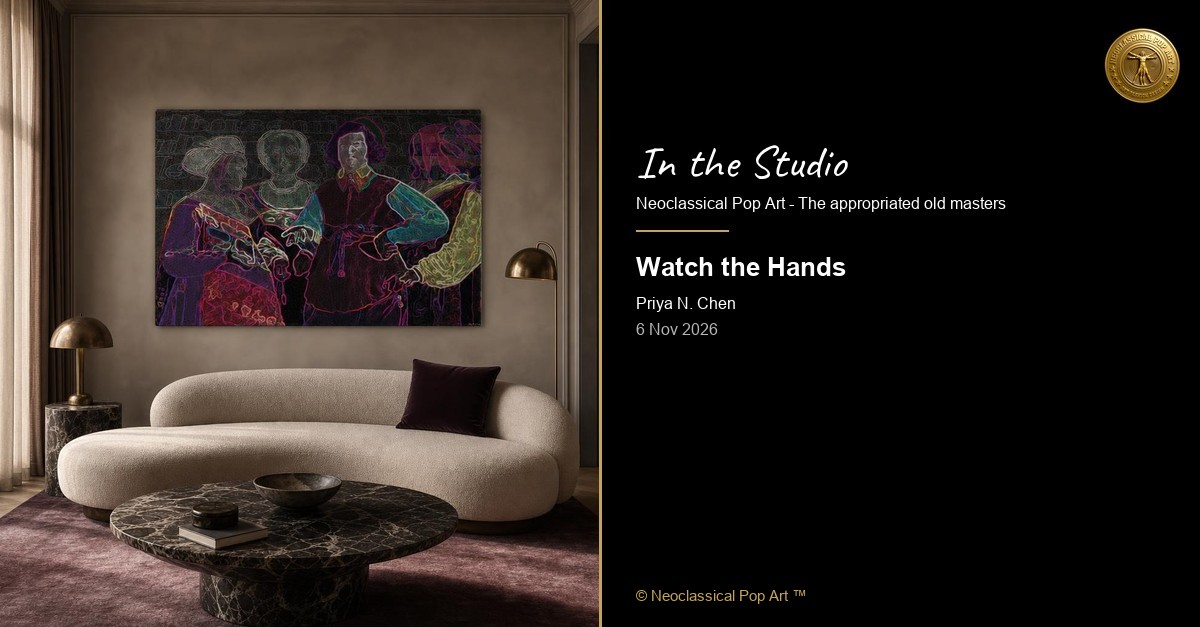
Nobody in La Tour's Fortune-Teller is looking at the crime. A young man of means leans in to hear his future. An old woman takes the coin from his palm as part of the ritual. At the left, a younger woman is already lifting the purse from his pocket while a companion, in profile, holds a hand ready to receive it, and the pale-faced girl at his side is cutting a medal from its chain. Everyone in the picture is in on it, except him.
A stage with no curtain
Georges de La Tour painted it, by the Metropolitan Museum's reckoning, probably in the 1630s, in oil on canvas, 101.9 by 123.5 centimetres. The figures are pressed close together as if on a stage, and the composition may have been influenced by a theatrical scene. At the top right runs the signature, a flourish that reads "G. de La Tour Fecit Luneuilla Lothar": made by Georges de La Tour at Lunéville, in Lorraine.
Most or all of the women are Romani, shown as thieves, a stereotype the period was happy to trade on. It is part of the picture's history, and part of why a modern eye reads it with care.
The purchase that made headlines
The story behind the canvas is as staged as the canvas. The dealer Georges Wildenstein bought it in 1949 for 7.5 million francs, after the Louvre had opened negotiations. For a decade it stayed with him. In 1960 the Metropolitan Museum of Art paid an undisclosed but very high sum, and the French press demanded to know how it had been allowed to leave France. André Malraux, then Minister of Culture, had to explain to the National Assembly why it had not ended up in the Louvre. The export licence, it later emerged, had been signed by Germain Bazin, the Louvre's head of old master paintings.
Then came the question every great picture eventually gets asked. In The Art of the Forger, published in 1984, the English art historian Christopher Wright doubted whether La Tour had painted it at all, and speculated that Bazin had enough doubt not to want it for the Louvre. The painting is generally accepted as La Tour's own, and the Met catalogues it as his. François Georges Pariset introduced it in the museum's Bulletin in 1961 as a newly discovered La Tour, and Dalia Judovitz's 2018 book, Georges de La Tour and the Enigma of the Visible, is one of the studies the painting's literature points to. A picture about looking has been looked at, and doubted, ever since.
Tour de La Tour
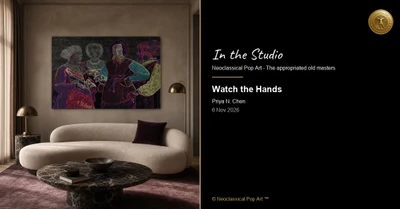
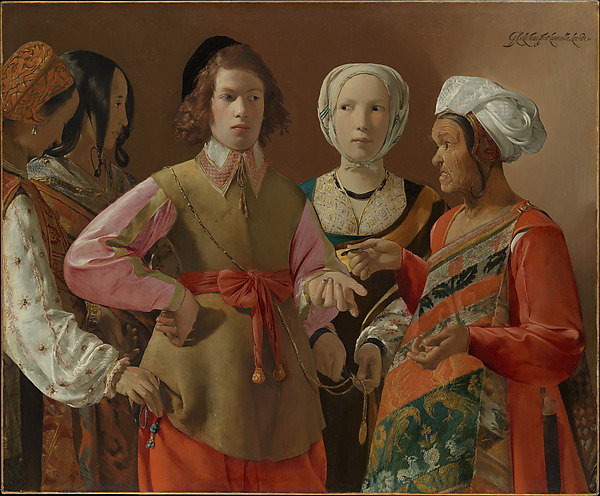
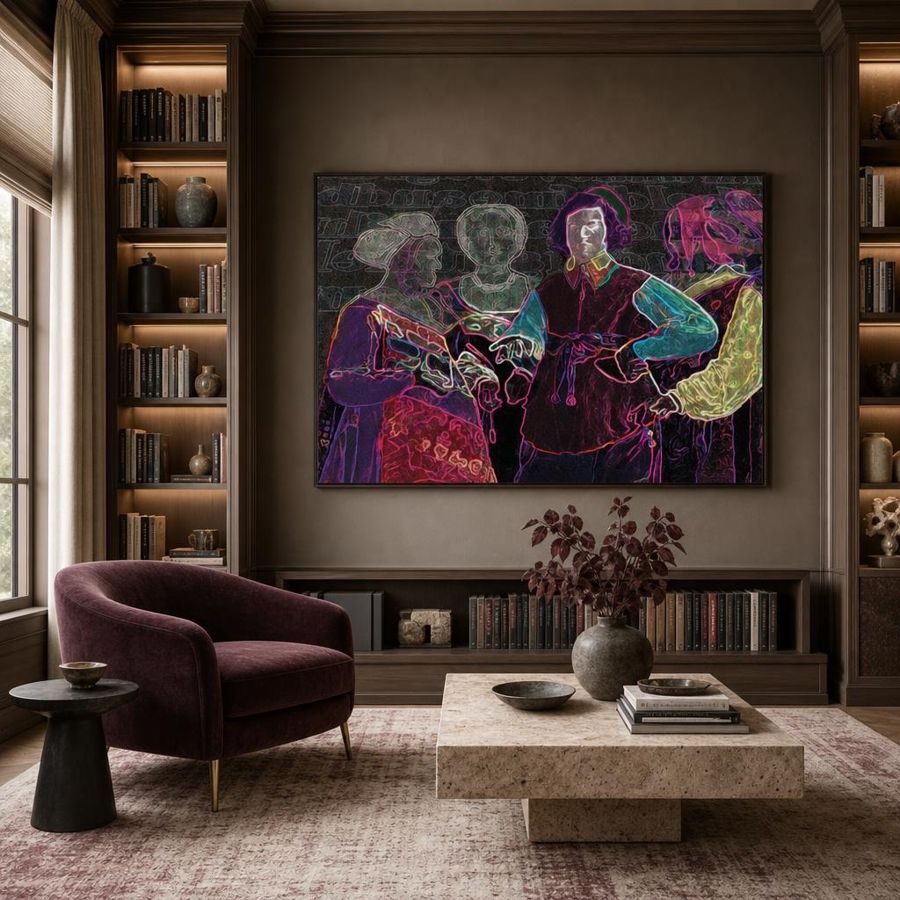
Which brings us to the wall. The Neoclassical Pop Art studio's answer to the swindle is "Tour de La Tour": a hand-painted pop take on the Met's picture. Same con, same hands, the French Baroque scene brightened in pop colour, a new painting about an old swindle with the sly comedy intact and a contemporary edge.
Over a dining table it becomes the talk of the evening.
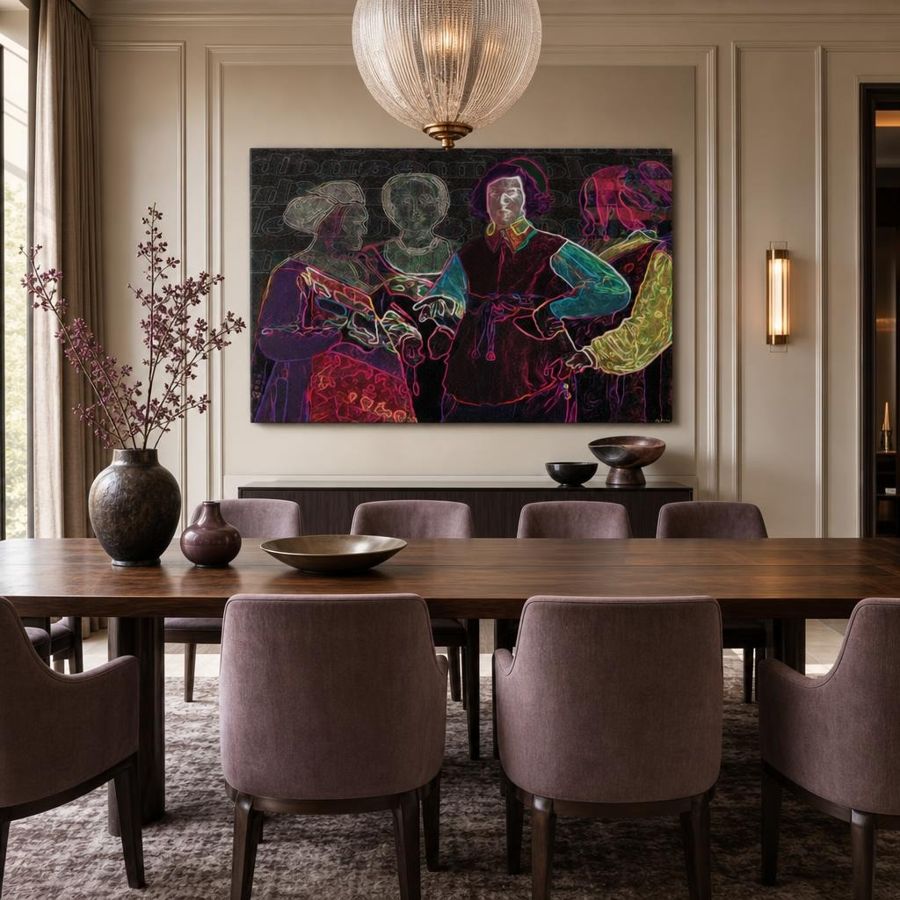
It is a piece made for rooms that want a conversation starter with a spine. Pop colour sits beautifully against plaster, limewash or dark library walls, and the composition does what the best Baroque pictures do: it pulls the eye to the hands and keeps it there.
In a library, it is the picture the shelves lean toward. Above a console in an entrance hall it is the first thing a guest reads and the last thing they stop thinking about.
Own the Hands
Some pictures decorate a room. This one gives it a plot. Tour de La Tour is a Limited Edition from the Neoclassical Pop Art studio, hand-painted in oil on stretched canvas: the old master's con retold in pop colour by a living hand. It is made to order, painted for you in about forty days, so the room you are designing now can have a picture that did not exist until you asked for it.
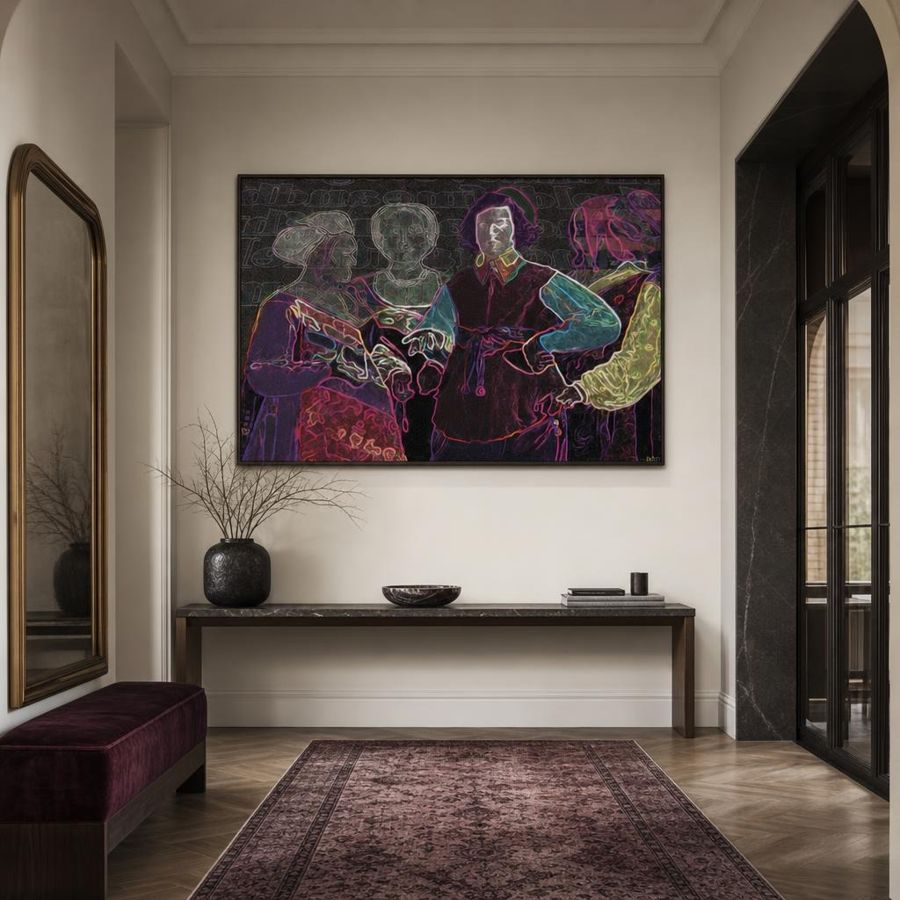
Hang it where guests gather and watch what happens. The eye finds the hands, the conversation finds the story, and for the length of a dinner nobody reaches for a phone. That is presence, and it is what separates a wall that is furnished from a wall that is finished.
Limited means limited. Reserve yours from the studio's Limited Edition collection, and give the wall that has been waiting for its centrepiece the last word.
Watch the hands.
Join Neoclassical Pop Art daily take on the arts, the weekly letter, and first word on product launches, sales, and free gifts.