
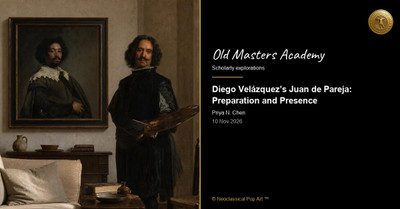
Diego Velázquez’s Juan de Pareja: Preparation and Presence
Priya N. Chen on 10th Nov 2026
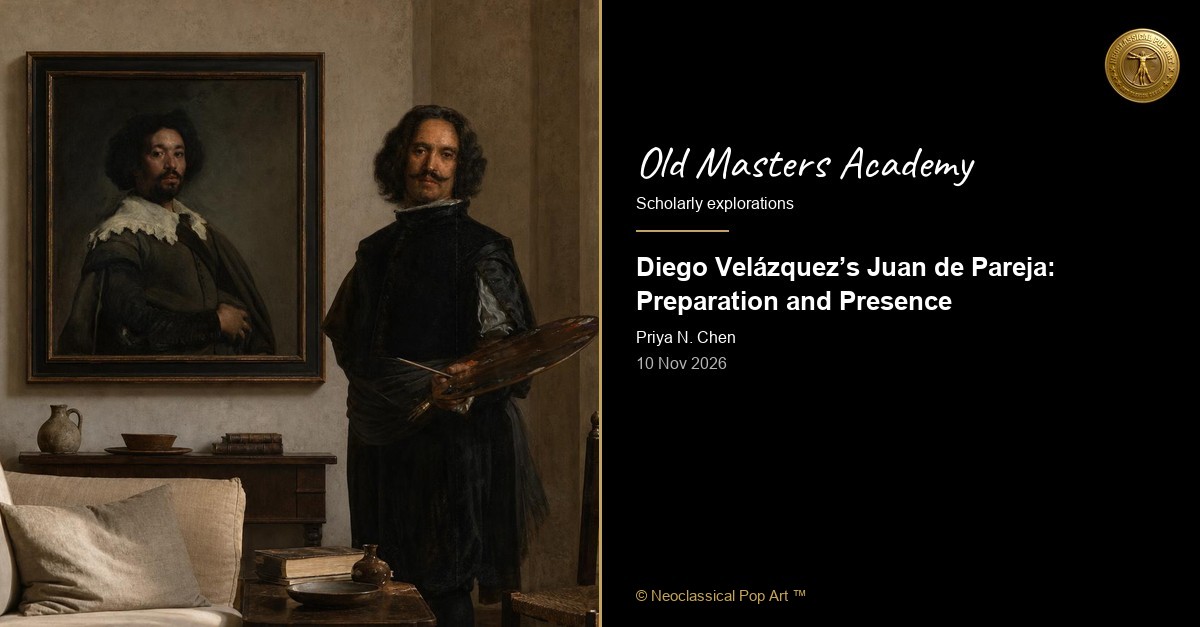

Diego Velázquez’s Juan de Pareja: Preparation and Presence
Spanish Baroque painting belongs to a period conventionally dated from about 1600 to 1750, and Diego Velázquez is its leading figure at the court of Philip IV. Born in Seville in 1599, he was apprenticed to the Sevillian painter and teacher Francisco Pacheco. The contract, signed in 1611, set a six-year term, and Pacheco’s school trained him in the classics, in proportion and in perspective. He built a reputation in Seville, moved to Madrid in 1623, and entered royal service as court painter to Philip IV.
In 1629 Velázquez travelled to Italy, a journey that mattered to the development of his style. In 1649 he returned on a royal mission to procure paintings and sculpture, and Juan de Pareja went with him. Pareja was enslaved and served as an assistant in Velázquez’s workshop. In Rome, in 1650, during this second Italian journey, Velázquez painted Juan de Pareja.
The Metropolitan Museum of Art holds the portrait: oil on canvas, 32 by 27½ inches (81.3 by 69.9 cm), accession number 1971.86. Velázquez painted it in his workshop as an exercise in preparation for his official portrait of Pope Innocent X. Its palette is restricted, and the loose, almost impressionistic brushwork brings an intense vitality to the sitter. The question the portrait poses is how a picture made in preparation for another picture turns limited means into a convincing presence.
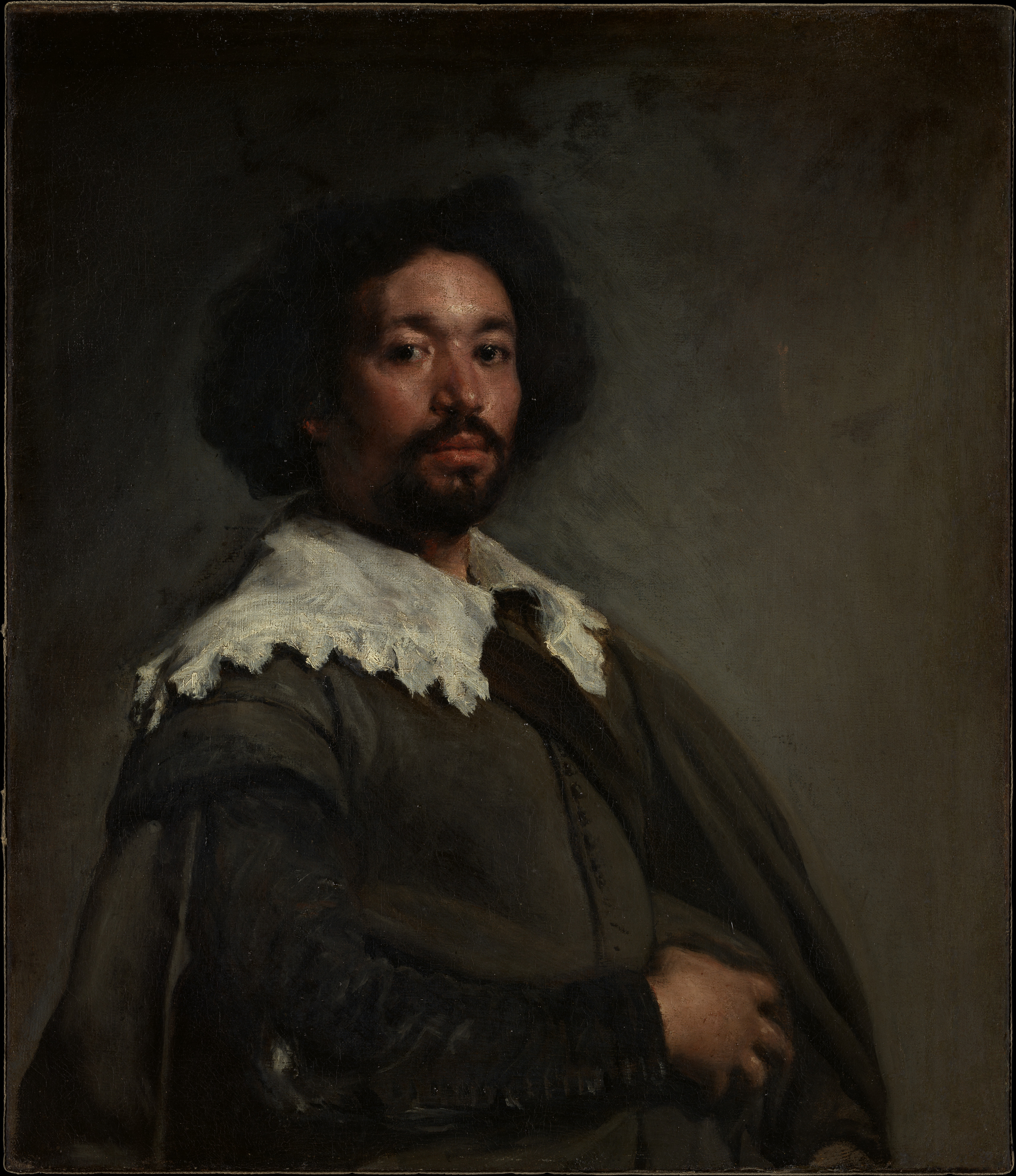
The man in the portrait
Juan de Pareja was born enslaved in southern Spain, probably near Antequera, and little is known of his background. He accompanied Velázquez to Italy in 1649 and worked beside him as an assistant. The portrait therefore belongs to the years of his servitude: Pareja is not a stranger encountered outside the painter’s working life but a person at the center of its labor and its hierarchy, and the portrait bears his name.
On 23 November 1650, still in Rome, Velázquez granted him a letter of freedom. It was to take effect after four years, on the condition that he not escape or commit a crime in that time. He was freed in 1654 and became a painter in his own right, and his later work includes The Calling of Saint Matthew (1661). The portrait, the letter and the freedom stand four years apart, and the portrait remains the record of the man before he was free.
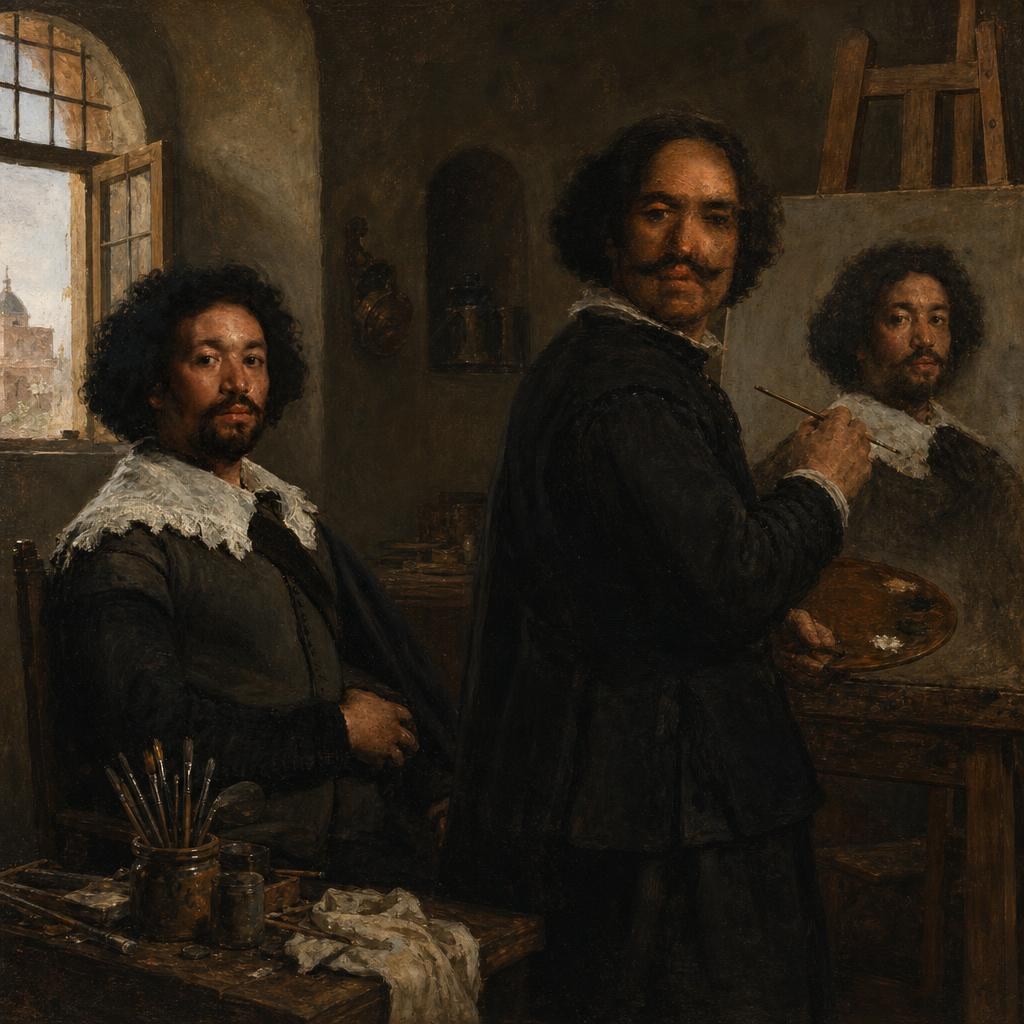
Preparation, palette, brushwork
Velázquez painted Pareja in preparation for his portrait of Pope Innocent X, and he used loose brushwork to meet the demands of a restricted palette. A limited range of colour does not diminish the image. The brushwork supplies the vitality, and the portrait becomes a problem of economy: how to make a person present through restricted means and an active hand.
Brushwork here is more than a surface effect. A stroke can describe, but it can also keep an image from going inert. The phrase “almost impressionistic” names a quality of handling, not a later movement or an influence. The strokes are loose, and that looseness animates the sitter. Palette and brushwork work together: the restricted range sets a limit, and the handling works within it to give the portrait its life. The portrait of Innocent X, dated 1649–1650, hangs in the Galleria Doria Pamphilj in Rome.

Rome, 1650
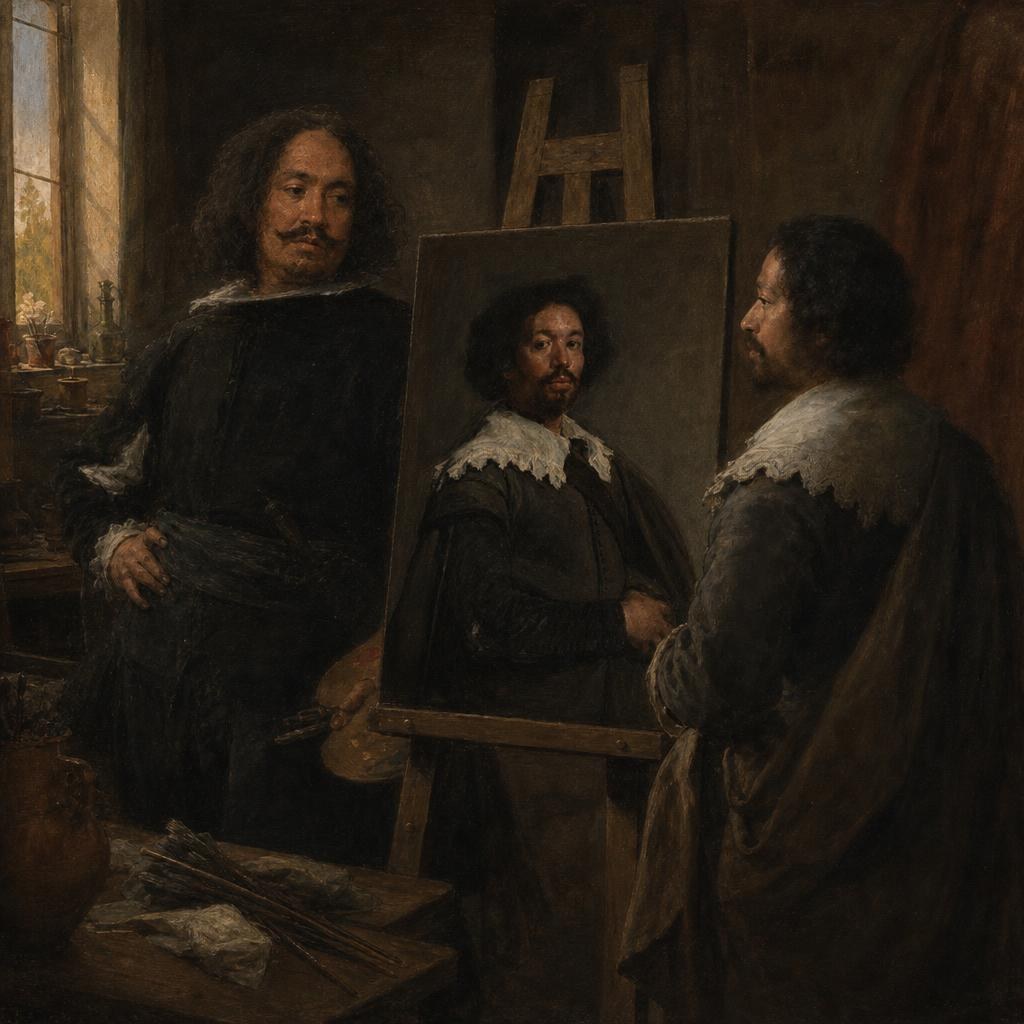
The year gives the portrait a public life as well as a workshop one. Juan de Pareja was shown at the Pantheon in Rome on 19 March 1650, as part of a larger exhibition of paintings. The painters who saw it are said to have declared that the other pictures were art, but this one alone was “truth.” It is an early record of the portrait’s claim on attention.
The painting entered public view in the year it was made, in the city where Velázquez was carrying out his royal mission. It was not only a private exercise kept within the workshop. The preparation for a papal portrait and the Pantheon display belong to the same year but serve different ends: one the painter’s work, the other the painting’s reception.
From workshop to collection
The portrait’s later history carries it into a very different setting. It was sold at auction on 27 November 1970, with Alec Wildenstein bidding on the Metropolitan Museum’s behalf, and the museum acquired it in 1971. The Met catalogues it under European Paintings and records it as public domain, with the credit line Purchase, Fletcher and Rogers Funds, and Bequest of Miss Adelaide Milton de Groot (1876–1967), by exchange, supplemented by gifts from friends of the Museum.
The movement from a workshop in Rome to an exhibition at the Pantheon to a museum collection in New York does not erase the conditions of the portrait’s making. Pareja was enslaved and worked as Velázquez’s assistant when he was painted. He later received a letter of freedom and became a painter. The portrait holds these facts together without resolving their unequal relation.
Supreme Intelligence
Velázquez’s training and royal service, the journey to Italy in 1649, Pareja’s place in the workshop, a portrait made in preparation for a pope’s, and a restricted palette answered by loose brushwork: this is the chain that produced Juan de Pareja in Rome in 1650 and showed it at the Pantheon that year. One reading is that the painting’s intelligence lies in the relation between constraint and touch, and that limited means can still organize a vivid encounter. As an analogy, intelligence, including artificial intelligence, can also emerge from working within limits. That is a reading, not a claim about what Velázquez intended. Velázquez’s mastery in Juan de Pareja lies in making restricted means serve the full presence of a person.
Join Neoclassical Pop Art daily take on the arts, the weekly letter, and first word on product launches, sales, and free gifts.