
A Lost Painting Returns, but the Process Is Still Out of Frame
Priya N. Chen on 1st Nov 2026
A Lost Painting Returns, but the Process Is Still Out of Frame
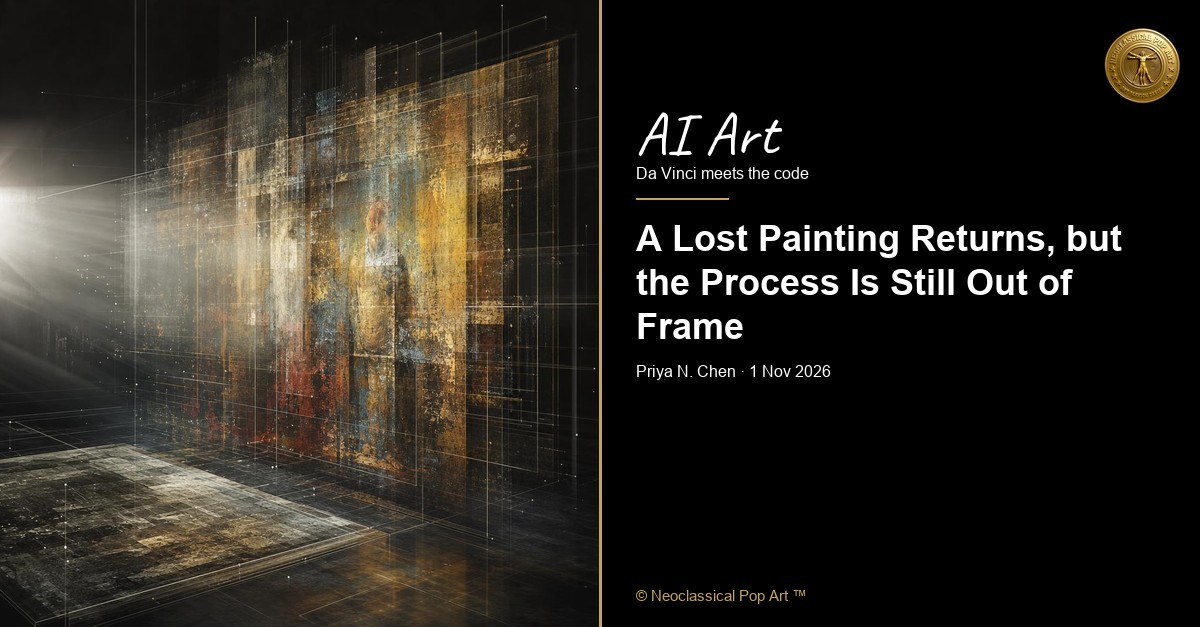
I would not call a generated image a recovered painting without seeing what the reconstruction rests on. ERR reports an AI revival of a lost 19th-century masterpiece by an Estonian artist. Its gallery story brings the work back into view. But the account does not identify the source material, the AI method, or the steps that produced the image.
That missing pipeline matters. In image-making, the input sets the limits of what can be claimed. A surviving fragment, an archival photograph, and a written description each carry different evidence. A model’s output cannot tell us which kind of evidence it received. Nor does the word “AI” explain whether the system generated an image, altered one, or assisted a person working from other material. The report leaves those mechanics unspecified.
Training is another part of the picture, but here its details are also unknown. Generative models learn patterns from examples and use them to produce new outputs. That general mechanism does not establish how this particular reconstruction was made. Without the model, training, and source material, viewers cannot separate documented features from decisions made during reconstruction. A convincing surface may invite close looking, but it cannot certify historical accuracy.
Credit should make that boundary visible. The original artist belongs in the story, alongside whoever gathered evidence, guided the process, and chose the final image. The gallery presentation shapes how viewers read the result: a label can distinguish a reconstruction from an original and state what is known about its making. ERR’s report, dated 1 November 2026, gives the revival a public frame; the process behind the image remains outside it.
A lost painting cannot confirm what has been restored or challenge what has been supplied. AI can give an absent work a visible form, but the image alone cannot show where evidence ends and interpretation begins. For makers and viewers alike, that distinction is part of the work.
Join Neoclassical Pop Art daily take on the arts, the weekly letter, and first word on product launches, sales, and free gifts.