
She Was Never Finished
Priya N. Chen on 6th Nov 2026

She Was Never Finished
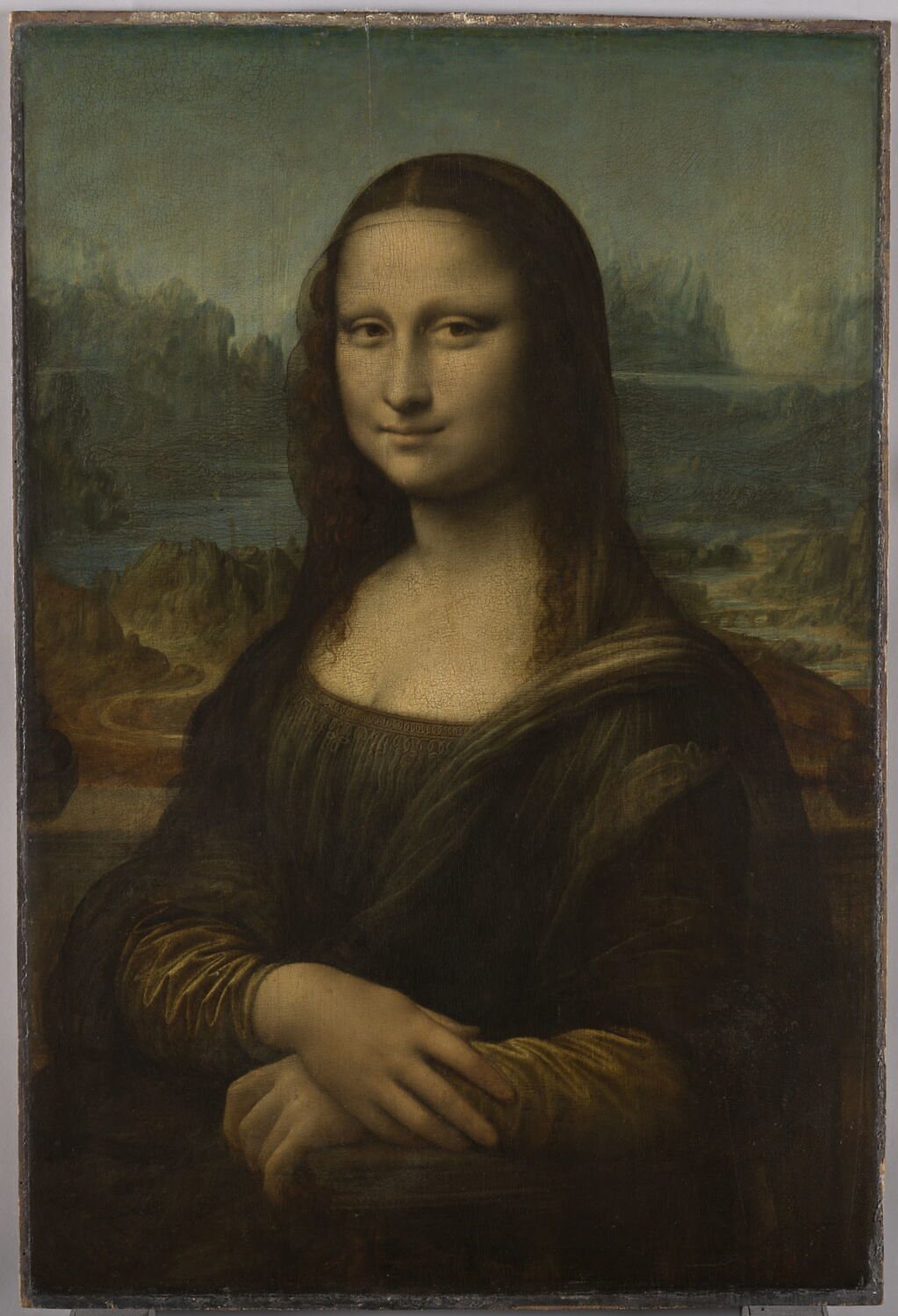
The most famous face on earth is an unfinished job. Leonardo da Vinci began the portrait of a Florentine silk merchant's wife around 1503, never let it go, and was still working on it when he died in 1519. Giorgio Vasari, writing in 1550, says Leonardo laboured four years and left it incomplete, then adds the line that has outlived everything else: the smile was more divine than human.
The note in the margin
The proof is a scribble. In October 1503 Agostino Vespucci, a colleague of Machiavelli at the Florentine chancery, was reading Cicero and jotted in the margin that Leonardo behaves like the ancient painter Apelles, who left a Venus unfinished: "Thus does Leonardo da Vinci in all his paintings, like the Head of Lisa del Giocondo and that of Anne, mother of the Virgin." The book sits in Heidelberg University Library. The note surfaced in 2005, and it pins the date and the sitter at once.
The sitter is Lisa Gherardini, born in Florence in 1479, who married the silk merchant Francesco del Giocondo in 1495 and had six children with him. Her married name did the rest: Mona Lisa is short for Madonna Lisa, and La Joconde is the French form of La Gioconda, the feminine of her husband's surname.
Four years, then a lifetime
It is a modest picture: oil on a poplar panel, 79.4 by 53.4 centimetres. Leonardo carried it to France, Francis I very probably acquired it in 1518, and the French state has held it ever since. It entered the Louvre collections in 1793 and is catalogued there as INV 779.
The Louvre calls the old question of who she really was a false problem, even as its record keeps the awkward evidence on file: a travel diary of 1517 in which a visiting cardinal admires three paintings at Leonardo's house, one of a Florentine lady painted from life at the request of the late Giuliano de' Medici. The museum does not accept the alternative readings, and the sixteenth-century tradition holds. Around the painting stands a whole library. The Louvre's bibliography runs to dozens of studies, from Cécile Scailliérez's 2019 monograph to a 2025 chemical analysis of Leonardo's lead white in the journal Technè.
My reading: a painter who would not let a picture go made the perfect picture to keep reworking. The unfinished is an open door, and the world has been walking through it for five hundred years.
Double Trouble
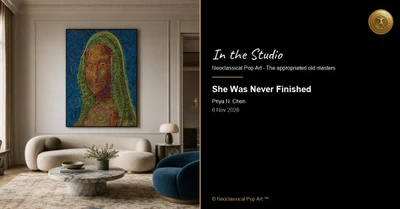
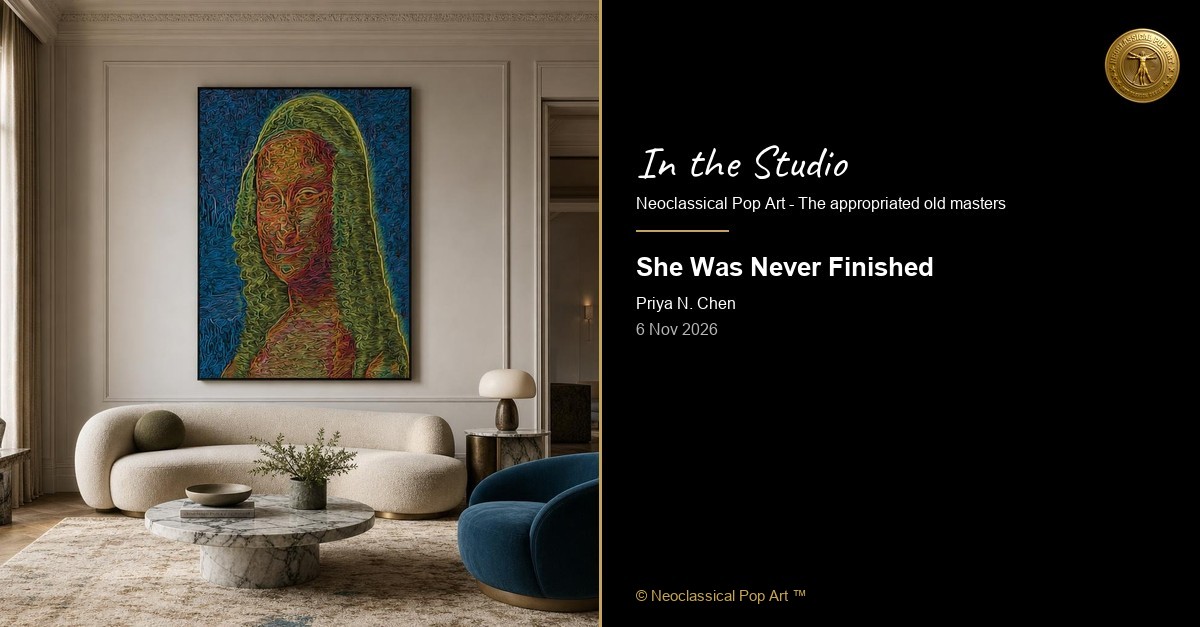
Neoclassical Pop Art walks through it with a modern hand. "Mona Lisa, Double Trouble" is not Leonardo's portrait in new colours. It is an entirely modern painting, a drawing in oil rather than the realism of the Renaissance original: the portrait everyone knows, made again in the language of today.
The series runs to four canvases. The first reimagines the sitter in that modern hand. The second is a separate new oil, made to hang alone or as a pair. "In Duality" splits the face in two so the smile seems to answer itself, and it is a one-of-a-kind original: no copies are made. "Unveiled" strips the portrait back until the enigma is seen fresh.
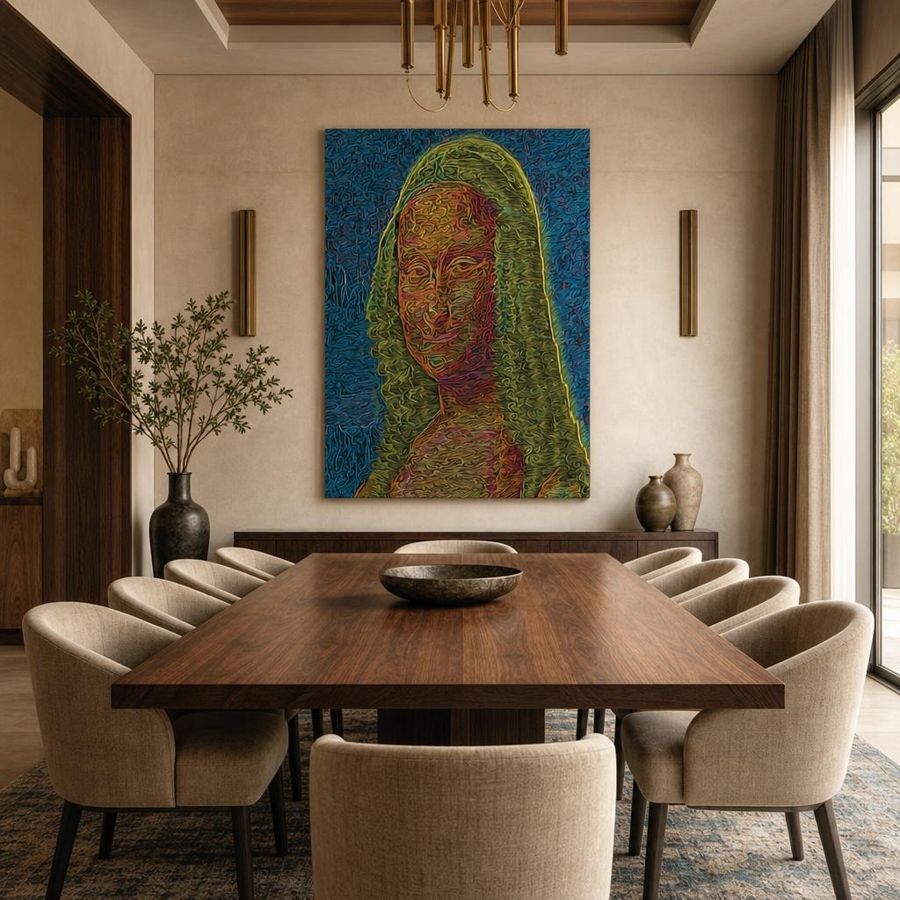
Hung at the end of a long walnut dining table, the gaze that follows you around the room does a host's work: it greets everyone and keeps the conversation honest.
In a private library, between deep shelves and a leather reading chair, she turns into the quiet colleague, the portrait that has read every spine in the room and keeps its opinion to itself.
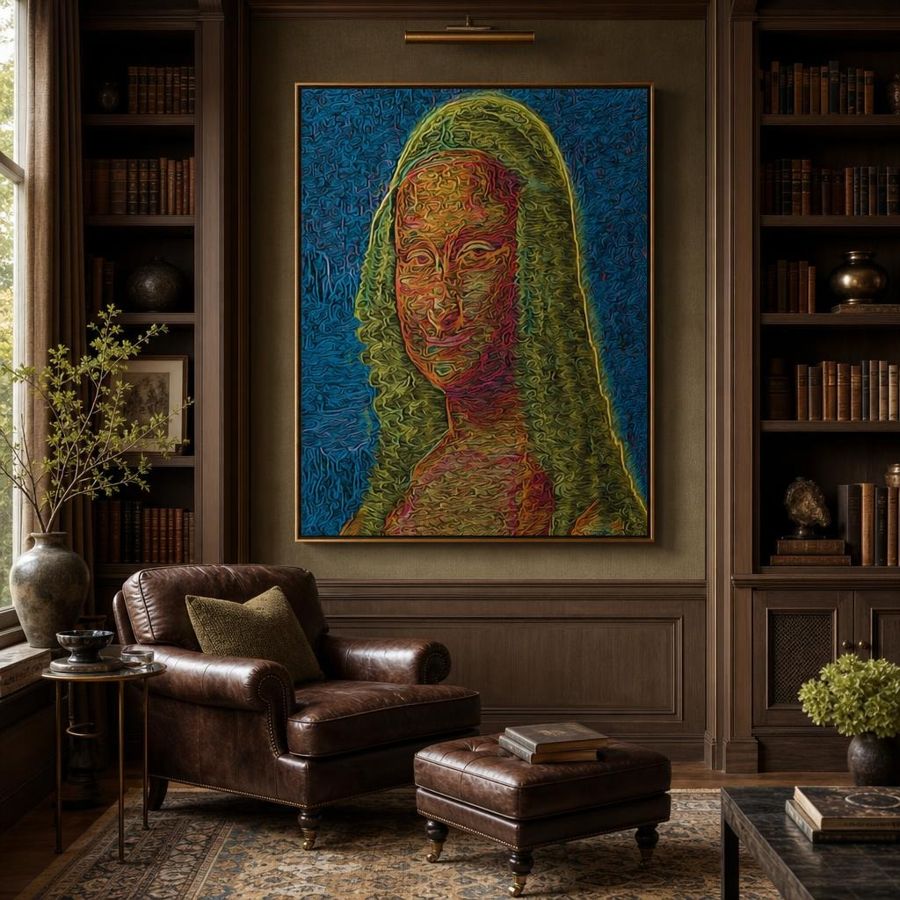
Finish Her
The "Mona Lisa, Double Trouble" canvases belong to the studio's Limited Edition category, hand-painted in oil on stretched canvas and made to order. Allow about forty days for the studio to paint yours. "In Duality" is the rarest of the four: a single original that will never be repeated.
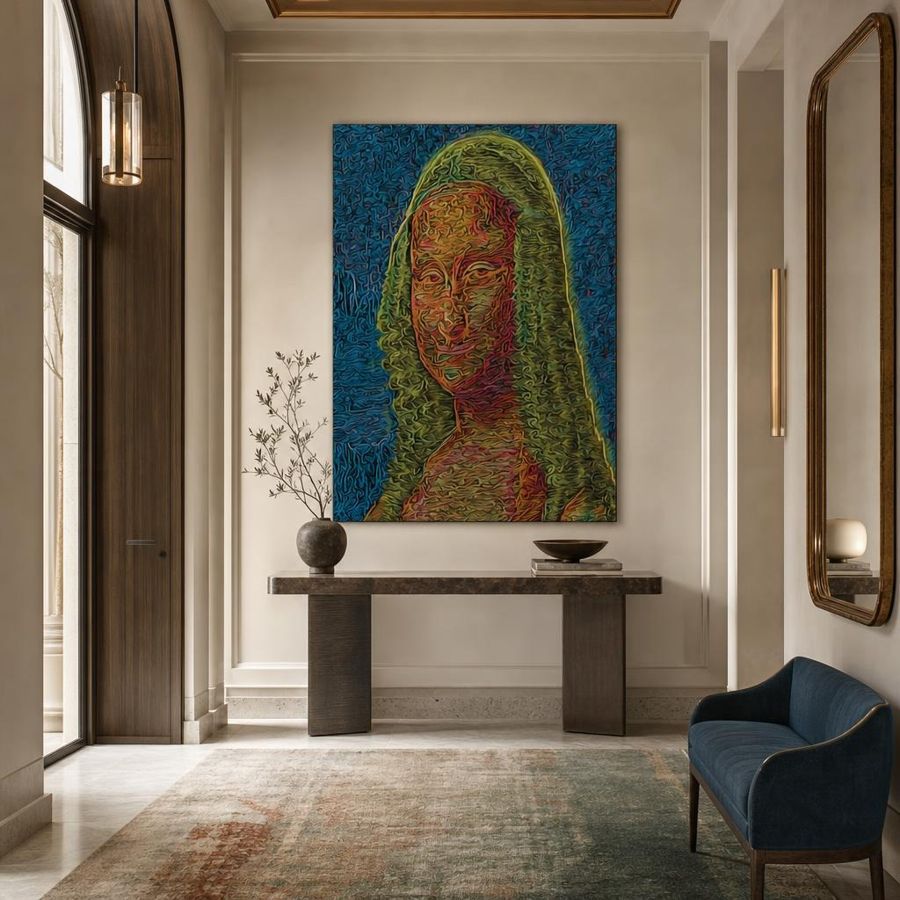
Hang one in a gallery-like entrance hall, above a console and beside a mirror, and the sitter greets each guest twice. Some walls are furnished. This one is finished.
She was never finished. Finish her.
Join Neoclassical Pop Art daily take on the arts, the weekly letter, and first word on product launches, sales, and free gifts.